

How to Select Pet-Safe Cleaning Products for Hardwood
Table of Contents
- Why Pet-Safe Cleaning Products Matter for Hardwood Floors
- Toxic Chemicals and Ingredients to Avoid in Floor Cleaners
- Non-Toxic Floor Cleaner Ingredients That Work
- Pet Safe Hardwood Floor Cleaner DIY Solutions
- How to Clean Hardwood Floors With Pets: Safe Practices
- What to Look for in Pet-Friendly Product Labels
- Common Mistakes to Avoid When Cleaning Around Pets
- Conclusion
Last Updated: August 30, 2026
Why Pet-Safe Cleaning Products Matter for Hardwood Floors
Your pets spend hours daily on hardwood floors, walking, lying, and occasionally licking spills. Whatever you use to clean those floors contacts their paws, fur, and sometimes their mouths. Standard commercial cleaners often contain ingredients that pose real risks to dogs and cats. A pet's smaller body weight means they absorb toxins more quickly. Their paws absorb chemicals through the skin, and they ingest residue during grooming. Certain cleaners also damage hardwood's protective coating, exposing the wood and creating splinter hazards.
Understanding which ingredients to avoid, which alternatives work, and how to apply them correctly can help pet parents find cleaners that protect both pets and floors.
Toxic Chemicals and Ingredients to Avoid in Floor Cleaners
Ammonia and Bleach: Why They're Dangerous
Ammonia and bleach are common culprits in household floor cleaners and pose serious risks to pets. Ammonia produces harsh fumes that irritate respiratory systems, especially problematic for cats whose respiratory tracts are more sensitive than dogs' (peer-reviewed research). Bleach causes chemical burns on contact with skin and mucous membranes, and ingestion leads to severe internal damage.
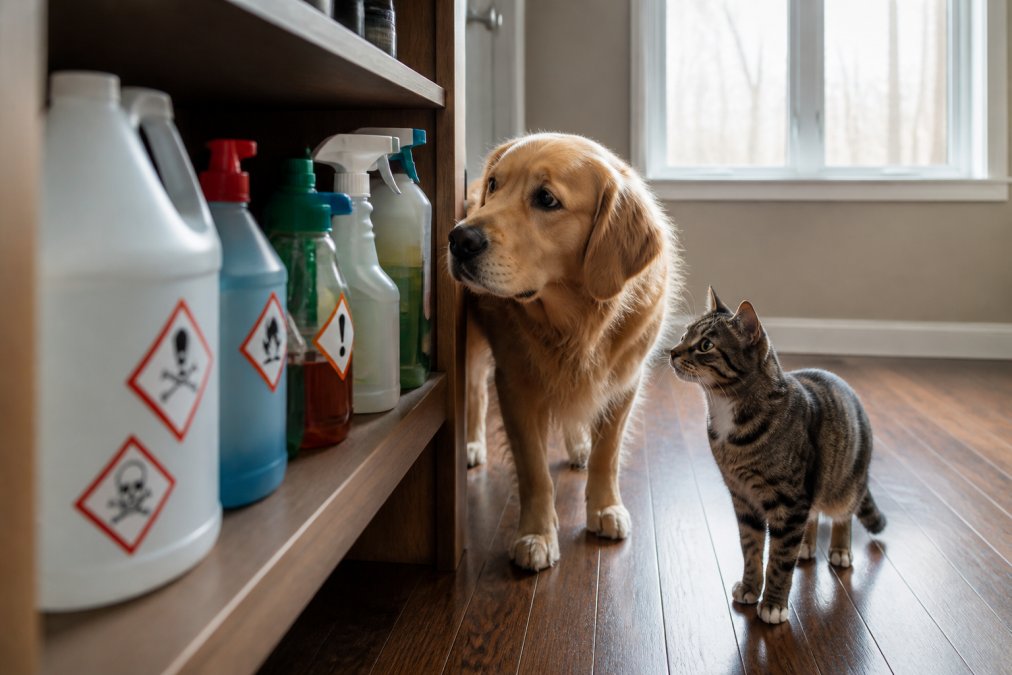
Mixing ammonia-based cleaners with bleach releases chloramine gas, a toxic compound causing life-threatening respiratory distress in pets and humans. Even residue left after cleaning poses a threat, pets absorb ammonia through their paws and ingest it during grooming. Many assume that products sold in stores must be safe around animals, but regulatory oversight of household cleaners is minimal compared to food or pharmaceuticals.
VOCs, Phthalates, and Synthetic Fragrances
Volatile organic compounds (VOCs) like glycol ethers and perchloroethylene evaporate at room temperature and accumulate in the body over time, causing respiratory irritation, neurological effects, and organ damage with chronic exposure (the EPA).
Phthalates are plasticizers added to make fragrances last longer. They're endocrine disruptors that interfere with hormone systems, affecting reproduction, development, and immune function in pets. They're often listed simply as "fragrance" on labels, so consumers can't identify them.
Synthetic fragrances irritate animals, particularly cats whose livers lack enzymes to metabolize many aromatic compounds. Formaldehyde, used as a preservative in some cleaners, is a respiratory irritant and carcinogen that triggers asthma-like symptoms in pets.
Look for products labeled free from ammonia, bleach, VOCs, phthalates, and synthetic fragrances.
Non-Toxic Floor Cleaner Ingredients That Work
Castile soap, derived from vegetable oils, is biodegradable and non-toxic, breaking down oils and dirt without harmful residue. Vinegar (acetic acid) cuts through grease and mineral deposits while being safe for pets and hardwood when properly diluted. Essential oils require careful handling, tea tree, eucalyptus, and citrus oils are toxic to cats, but lavender in heavily diluted form can be safe.
Hydrogen peroxide works as a mild disinfectant without bleach's toxicity, breaking down into water and oxygen. Baking soda is a gentle abrasive and deodorizer completely safe for pets. Plain water with a microfiber mop removes most surface dirt and dust.
Pet Safe Hardwood Floor Cleaner DIY Solutions
Vinegar and Water Solution
Mix one part white vinegar with four parts water. This ratio is crucial, too much vinegar can damage the hardwood finish. Apply to a damp microfiber mop, not wet. Excess moisture causes swelling and warping. Wring out your mop thoroughly before each application.
Work in sections, moving with the wood grain to prevent streaking. The vinegar smell dissipates within an hour with no respiratory irritation or residue for pets to absorb. This solution works best for routine maintenance. For stubborn spots, let it sit for a minute before wiping. Don't use on oiled hardwood finishes.
Castile Soap and Essential Oil Blends
For deeper cleaning, combine one-quarter teaspoon of castile soap per two cups of water. Apply with a damp mop. If adding fragrance, use a single drop of lavender essential oil per two cups, a strong smell indicates unsafe concentration.
Never use tea tree oil, eucalyptus, citrus oils, or peppermint around pets. These are toxic to dogs and especially cats.
How to Clean Hardwood Floors With Pets: Safe Practices
Damp Mopping and Residue-Free Techniques
Damp mopping, not wet mopping, is the standard for hardwood with pets. Wring your mop until nearly dry, if water drips or pools on the floor, it's too wet. Work in sections with the wood grain and allow complete air drying before pets return. Wet floors are slipping hazards, especially for older dogs or cats.
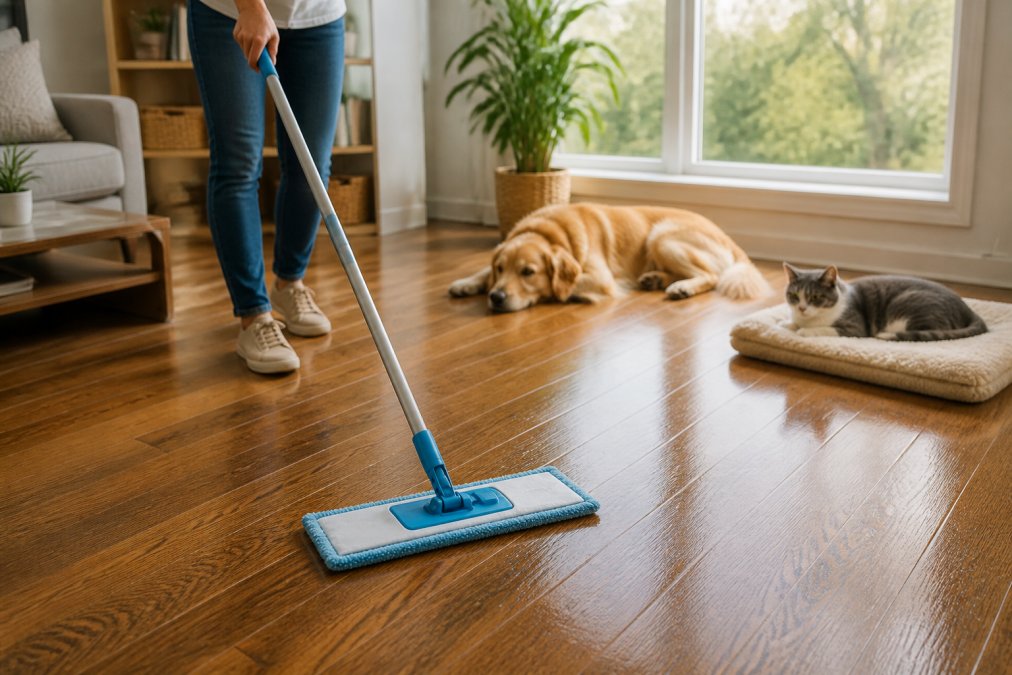
After mopping with your cleaning solution, do a final pass with plain water to remove soap residue. This prevents dirt attraction, slipping, and digestive upset from ingestion. Allow at least an hour for complete drying before pets return.
Protecting Hardwood Finish and Paw Safety
Avoid abrasive scrubbing with hard-bristled brushes. Microfiber mops are gentler and more effective. Never use steel wool or scouring pads. Blot spills immediately, the longer liquid sits, the more it penetrates the finish.
Inspect floors regularly for dull spots, water marks, or scratched areas indicating finish damage. Keep pet nails trimmed every 4-6 weeks to prevent scratching and splinters. Consider non-slip rugs in high-traffic areas to reduce slipping hazards and protect the finish.
What to Look for in Pet-Friendly Product Labels
Look for explicit statements like "pet-safe," "non-toxic," or "safe for pets." Check ingredient lists and avoid ammonia, bleach, phenol, or cresol. Look for recognizable ingredients: water, vinegar, castile soap, safe essential oils, baking soda.
Avoid vague language, "all-natural" doesn't mean safe, and "hypoallergenic" isn't regulated. Third-party certifications add credibility. Check dilution instructions; products requiring heavy dilution are often more concentrated and hazardous. Avoid products with warnings about keeping pets away during or after application.
Common Mistakes to Avoid When Cleaning Around Pets
Don't assume natural products are safe, eucalyptus and citrus oils are natural and toxic to cats. Never mix products, even if each is pet-safe. Remove pets during cleaning and for at least an hour afterward while floors dry.
Apply the correct amount of product, more doesn't mean cleaner floors, just more residue. Test cleaners on inconspicuous areas if unsure about your hardwood finish. Allow adequate drying time before walking on floors. Clean your mops thoroughly after each use.
Keeping hardwood floors clean while protecting pets doesn't require compromise. It requires understanding which ingredients to avoid, which alternatives work, and which practices keep both floors and animals safe.
At Bentley's Bark, we understand that pet parents want solutions without compromise. Our curated selection of pet-safe home products includes options designed specifically for households with dogs and cats. From pet-safe cleaning guides to product recommendations, we're committed to helping you maintain a clean, healthy home for your entire family. Start with a simple vinegar and water solution with proper damp mopping technique, and you'll find that pet-safe cleaning is not only possible, it's simpler than managing traditional chemical cleaners.
Frequently Asked Questions
Q: What ingredients should I avoid in floor cleaners if I have pets?
A: Avoid ammonia, bleach, glycol ethers, formaldehyde, phthalates, and perchloroethylene. These chemicals cause respiratory irritation, chemical burns on paws, and ingestion risks if your pet licks treated surfaces. Synthetic fragrances and essential oils can also trigger sensitivity in cats and dogs. Always check labels for ammonia-free and bleach-free formulations, and look for products certified non-toxic by recognized safety standards.
Q: Are natural floor cleaners always safe for dogs and cats?
A: Not automatically. While many natural ingredients like vinegar and castile soap are pet-safe, some essential oils and plant-based compounds can be harmful. Tea tree oil, eucalyptus, and citrus oils are toxic to pets. The safest approach is to verify that any natural cleaner is specifically formulated and tested for pet safety, not just labeled 'natural.' Dilution ratio matters too, even safe ingredients can irritate paws if too concentrated.
Q: How can I tell if a cleaner is truly pet-safe?
A: Look for labels stating 'pet-safe,' 'non-toxic,' and 'residue-free.' Verify the product is ammonia-free, bleach-free, and free of volatile organic compounds (VOCs). Check ingredient lists for known toxins like phthalates and formaldehyde. Third-party certifications or biodegradable claims add credibility. If unsure, contact the manufacturer directly to confirm dermal contact and ingestion safety for cats and dogs.
Q: Can I use a vinegar solution safely on hardwood floors with pets?
A: Yes, diluted vinegar solutions are pet-safe and effective for hardwood. Mix one part white vinegar with three parts water for general cleaning. However, test on a hidden area first, vinegar can dull some hardwood finishes if overused. Always damp mop rather than soak the floor, and ensure proper ventilation to minimize odor. Vinegar is non-toxic, biodegradable, and leaves no harmful residue on paws.
This article was written using GrandRanker