

How to Choose Durable Dog Toys: A 2026 Guide
Table of Contents
- Understanding Your Dog's Chewing Style and Needs
- Best Indestructible Dog Toys for Heavy Chewers
- Safe Materials for Dog Chew Toys
- Size, Strength, and Bite Force Matching
- Signs a Dog Toy Is a Choking Hazard
- Interactive vs. Independent Play Toys
- Toy Maintenance, Rotation, and Replacement
- Conclusion
Last Updated: August 9, 2026
Understanding Your Dog's Chewing Style and Needs
Every dog chews differently. Some gnaw gently on rope toys, others demolish rubber balls within hours. Before buying any toy, understand where your dog falls on that spectrum, the wrong toy becomes a safety hazard, not entertainment.
Heavy chewers apply sustained pressure over extended periods. Power chewers bite with force, testing structural integrity. Watch your dog's habits for a few days: Does shredding happen within minutes? Does your dog swallow pieces or spit them out? These observations shape every toy choice going forward.
The stakes matter. A toy that fragments easily becomes a choking hazard. Material breaking into small pieces can lodge in the digestive tract. Size-appropriate toys prevent swallowing accidents entirely.
Best Indestructible Dog Toys for Heavy Chewers
The term "indestructible" is marketing language, not a guarantee. Heavy chewers will eventually destroy anything given enough time and pressure. The goal is finding toys that outlast the chewing cycle and show wear gradually rather than fragmenting suddenly.
For power chewers, solid rubber toys with high material density outperform softer alternatives. The Durable Dog Chew Ball from Bentley's Bark ($19.95) is engineered for fetch and sustained chewing without quick failure.
Nylon toys designed for heavy chewers offer reinforced construction that resists splintering. Look for toys marketed for "aggressive chewers" or "power chewers", manufacturers using these terms typically design with realistic expectations about heavy chewing.
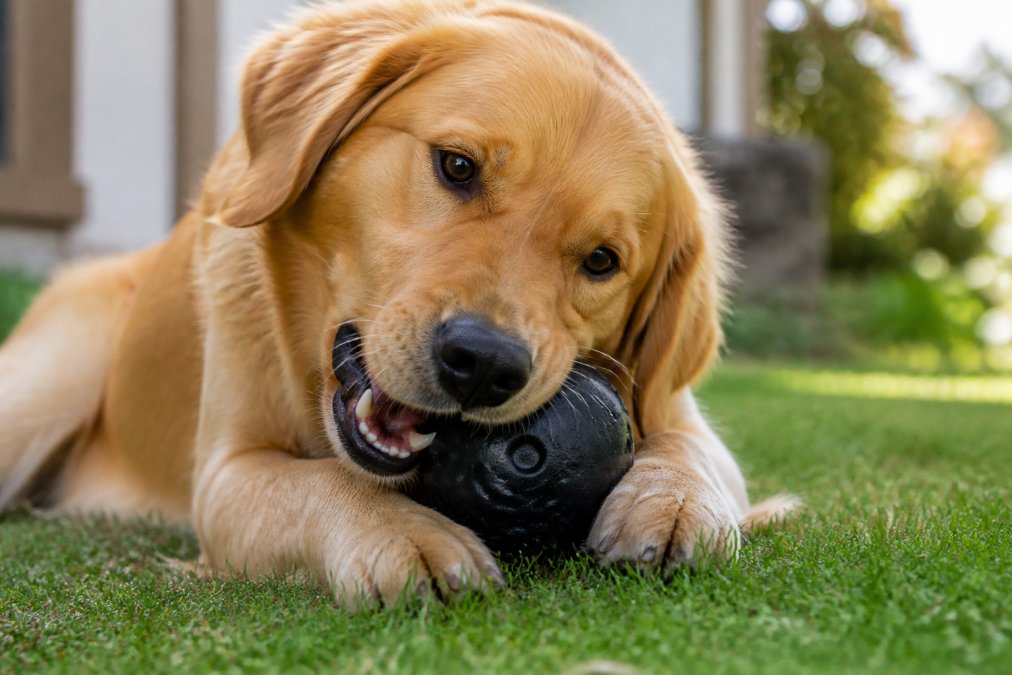
Puzzle toys add mental enrichment alongside chewing satisfaction. The Durable Chew & Treat Puzzle Ball ($19.95) combines interactive play with durable construction. Dogs must work to extract treats, keeping them engaged longer and providing behavioral enrichment beyond simple chewing.
For dogs focused on dental health, the Molar Stick Dog Toothbrush and Chew Toy ($29.95) serves as both a chew toy and dental care tool, providing structural integrity while supporting canine dental health.
Why 'Indestructible' Claims Need Skepticism
Marketing departments use "indestructible" because it sells. No material withstands unlimited chewing from a determined dog. A toy marketed as indestructible will eventually show wear. The question is whether it degrades safely or fails suddenly.
Sudden failure creates risk. A toy that splinters or tears open can release small pieces your dog swallows. Gradual wear gives you time to notice and replace the toy before pieces become a hazard. This is actually the better outcome.
When evaluating toy durability, ignore marketing language. Look instead at material density, construction method, and reinforced stitching. A toy with solid construction will outlast one held together with weak glue and thin material, regardless of what the label claims.
Safe Materials for Dog Chew Toys
Rubber toys made from natural or synthetic rubber are among the safest options. Nontoxic rubber doesn't leach chemicals during extended chewing. Solid rubber resists tearing and doesn't splinter like some plastics. The material degrades gradually rather than suddenly.
Nylon toys engineered for chewing offer safety when manufactured with proper material density. High-quality nylon resists breaking and maintains structural integrity under aggressive chewing. Low-quality nylon becomes brittle and fragments easily, a serious hazard.
Avoid toys made from materials that splinter easily or break into small pieces. Plastic toys often fail this test. Wood-based toys can splinter dangerously. Toys with small attached parts, bells, beads, plastic eyes, create choking hazards regardless of base material.
Rubber vs. Nylon: Durability and Safety Trade-offs
Rubber toys excel at resisting puncture wounds. A dog's teeth can't easily pierce solid rubber, maintaining structural integrity longer under aggressive biting. Rubber doesn't splinter. The downside: rubber can be swallowed in chunks if a dog tears pieces off.
Nylon toys offer better interactive potential. Many designs incorporate treat pockets or puzzle elements that engage dogs mentally. Nylon breaks into smaller pieces, which sounds safer until you realize your dog might swallow multiple small pieces. Quality matters enormously, premium nylon resists splintering while budget nylon becomes brittle and fragments.
For heavy chewers, solid rubber outperforms nylon in pure durability. However, nylon puzzle toys provide behavioral enrichment that pure rubber can't match. The best approach combines both: use rubber toys for sustained chewing and nylon puzzle toys for interactive play under supervision.
The safety trade-off comes down to supervision and replacement frequency. Rubber toys last longer but require monitoring to catch pieces if they tear. Nylon toys need more frequent replacement but offer more mental engagement. Neither is inherently safer, context and supervision determine actual risk.
Size, Strength, and Bite Force Matching
A toy that fits your dog's mouth properly is safer than one that's too small or too large. Small toys create choking hazards. Oversized toys can cause jaw strain.
A toy should be larger than your dog's mouth, they shouldn't fit the entire toy inside and close their teeth around it. For small dogs, toys should be at least tennis ball size. For large dogs, toys should be significantly larger, like grapefruit or softball size minimum.
Bite force matters more than most pet parents realize. A German Shepherd applies different pressure than a Chihuahua. A toy surviving a small dog's chewing might shred instantly under a large dog's bite force. If your dog is smaller but still a heavy chewer, you might need toys designed for larger dogs.
Weight and density should match your dog's strength. A solid rubber toy weighs more than a hollow plastic one, and that weight indicates material density that resists chewing better. Test toy selection by observing how your dog interacts with it. Can your dog apply their natural chewing motion without straining their jaw?
Signs a Dog Toy Is a Choking Hazard
Worn toys become dangerous. A toy that was safe when new can become a hazard as material degrades.
Visible tears, punctures, or holes signal replacement time. Once the outer layer is compromised, interior material can separate and become swallowable. Don't wait for complete failure, replace toys at the first sign of significant damage.
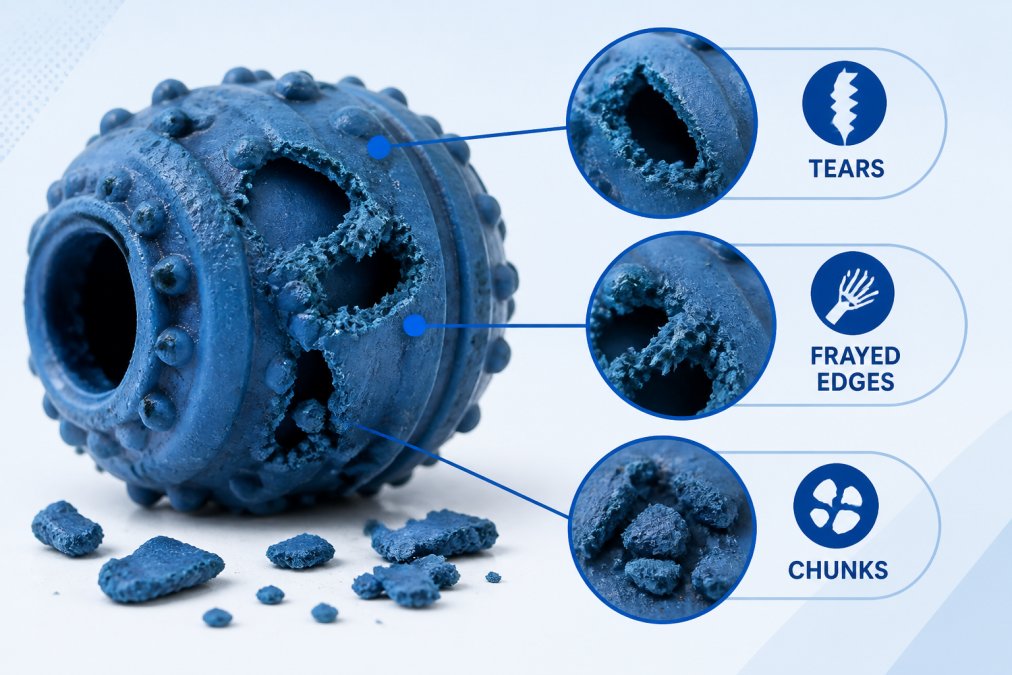
Pieces that come off easily indicate structural failure. If you can pull material away with light pressure, your dog can tear it off. Fraying edges, peeling material, or separating seams all precede complete failure.
Toys that have become soft or spongy have degraded beyond safe use. Material breakdown means fragmentation is happening. Replace soft toys immediately.
The safest approach: rotate toys and inspect them regularly. Remove any toy showing wear signs before your dog causes further damage. Fresh toys also re-engage dogs better.
Interactive vs. Independent Play Toys
Dogs need different types of play. Interactive toys involve you directly, tug-of-war toys, fetch balls, and throwing toys strengthen your bond and let you control play intensity. Independent play toys keep your dog engaged when you're busy or absent, puzzle toys and chew toys designed for sustained solo chewing.
The Durable Chew & Treat Puzzle Ball works well for both contexts. During supervised play, refill it with treats and watch your dog problem-solve. Left alone, it keeps your dog mentally stimulated for extended periods.
For heavy chewers, independent play toys must be exceptionally durable. Choose toys specifically engineered for aggressive chewers if your dog will use them alone. The Rubber Molar Stick Chew Toy for Aggressive Dogs ($19.95) is designed specifically for unsupervised use by power chewers.
Toy Maintenance, Rotation, and Replacement
A maintenance routine extends toy life and keeps your dog safer. Clean toys weekly in hot soapy water. Rubber toys can go in the dishwasher (top rack) if the manufacturer approves. Dry toys completely before returning them to your dog.
Inspect toys during cleaning for tears, soft spots, color changes, or material separation. Small damage caught early can sometimes be repaired with non-toxic adhesive. Significant damage means replacement.
Rotate toys on a schedule. Keep 4-6 toys in active rotation and store the rest. Bring out stored toys every 2-3 weeks. This prevents obsession with any single toy and extends your collection's lifespan.
Track replacement frequency. If a toy lasts only a week, it's not durable for your dog's needs. Use this data to guide future purchases.
Conclusion
Choosing durable dog toys comes down to matching toy construction to your dog's actual chewing behavior, not marketing claims. Understand whether your dog is a casual chewer, heavy chewer, or power chewer. Choose toys made from materials that degrade gradually rather than suddenly, solid rubber and reinforced nylon work better than hollow plastics or brittle materials.
At Bentley's Bark, we've curated toys specifically engineered for different chewing styles. The Durable Dog Chew Ball, Durable Chew & Treat Puzzle Ball, and Rubber Molar Stick Chew Toy for Aggressive Dogs are hand-picked for durability and safety because toy failure is a safety issue. With complimentary shipping on every order, building a rotation of quality toys becomes affordable. Start with toys matched to your dog's chewing strength, maintain them properly, and replace them when wear appears. Your dog's safety depends on it.
Frequently Asked Questions
What materials are safest for durable dog chew toys?
The safest materials for durable dog chew toys are nontoxic rubber, natural rubber, and food-grade nylon. Look for toys labeled as veterinary-approved and free from BPA, phthalates, and heavy metals. Solid rubber toys offer excellent durability for aggressive chewers without splintering, while nylon toys provide long-lasting wear but require supervision to prevent ingestion of small pieces. Always verify that materials meet Canadian consumer safety standards before purchasing.
How do I know if a toy is truly indestructible?
No toy is truly indestructible, this is a marketing claim. Instead, look for toys with sturdy construction, high material density, and positive reviews from owners with power chewers. Test toys by applying firm hand pressure; they should resist puncturing or tearing. Choose size-appropriate toys that match your dog's bite force, and always supervise play. Replace toys showing wear and tear immediately to prevent choking hazards. Rotating toys regularly also extends their lifespan.
What are signs a dog toy is a choking hazard?
Replace a toy immediately if you notice small pieces breaking off, visible tears or punctures, squeakers becoming loose, or material separating from seams. Toys smaller than your dog's mouth, toys with detachable parts, and toys with worn-out structural integrity pose serious choking risks. Check toys weekly for wear and tear, especially after aggressive chewing sessions. If your dog swallows pieces, contact your veterinarian right away.
How often should I rotate or replace durable dog toys?
Inspect toys weekly for damage and rotate them every few days to maintain your dog's interest and reduce wear on individual toys. Replace toys every 2-4 weeks for aggressive chewers or immediately if damage appears. Toy rotation prevents boredom while extending the lifespan of your collection. Clean toys regularly with warm water and mild soap, and air-dry completely before returning them to play. Proper maintenance and rotation ensure both safety and long-term durability.
This article was written using GrandRanker