

Best Aesthetically Pleasing Cat Trees 2026
Table of Contents
- What Makes Aesthetically Pleasing Cat Trees Stand Out
- Quick Comparison Table: Top Aesthetically Pleasing Cat Trees
- Best Cat Trees for Large Cats That Fit Modern Homes
- Stability and Structural Integrity: What You Need to Know
- Materials That Last: Wood, Sisal, and Faux Fur
- How to Clean Wooden Cat Trees and Maintain Their Look
- Space-Saving Designs for Apartments and Small Rooms
- How We Evaluated These Cat Trees
Last Updated: August 14, 2026
What Makes Aesthetically Pleasing Cat Trees Stand Out
The best aesthetically pleasing cat trees challenge the assumption that cat furniture must be hidden away. They're designed to complement your home rather than clash with it, merging feline instinct with interior design principles that work for modern living spaces.
These pieces prioritize clean lines, quality materials, and finishes that coordinate with contemporary furniture. They serve dual purposes: meeting your cat's climbing and scratching needs while functioning as home decor you actually want visible. What separates them from basic alternatives is attention to structural detail, sturdy bases, multi-level platforms, and perches that feel intentional rather than tacked on. Materials matter: solid wood frames, quality sisal rope, and durable upholstery that won't show wear after months of daily use.
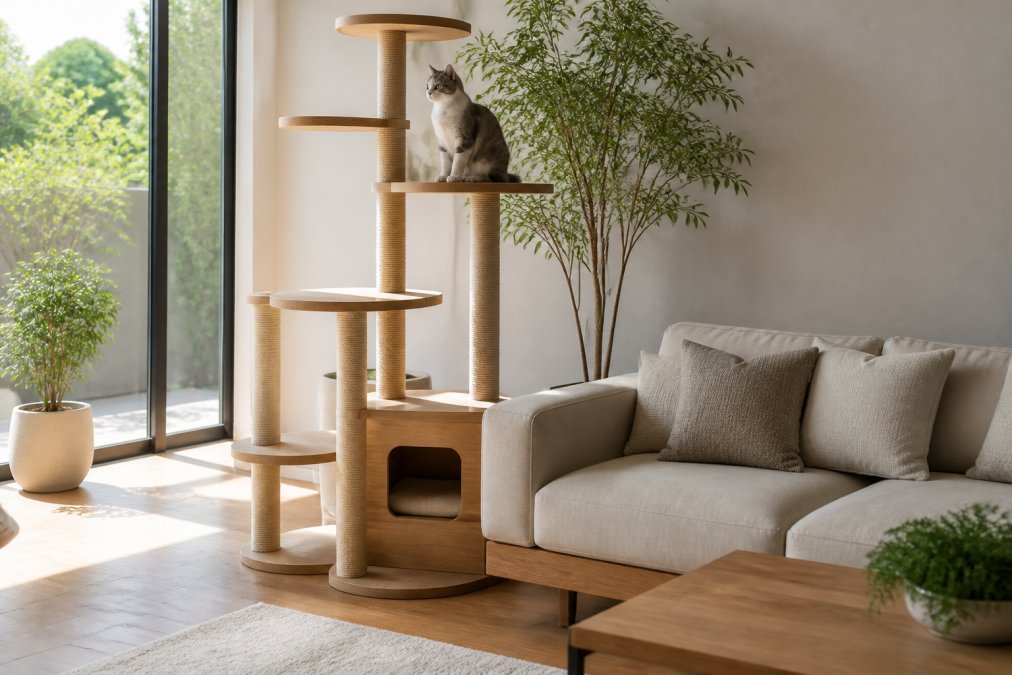
Stability is non-negotiable. A beautiful cat tree that wobbles defeats its own purpose. The weight capacity, base design, and internal bracing all determine whether a piece feels like furniture or a liability.
Quick Comparison Table: Top Aesthetically Pleasing Cat Trees
| Product | Starting Price | Best For | Key Feature | Material |
|---|---|---|---|---|
| BestPet Hidden Cat Litter Box Enclosure | $229.95 | Dual-purpose furniture | Removable divider for storage | Particle board with wood finish |
| Yaheetech Hidden Cat Litter Box Enclosure | $299.95 | Open-shelf design | Towel rack and ventilation | CARB P2-compliant MDF |
| Hidden Litter Box with Shelves & Doors | $239.95 | Industrial aesthetic | Multi-shelf storage | Particle board, white/vintage |
| Cat Litter Box with Shelves & Scratching Posts | $279.95 | Multi-cat households | Integrated scratching posts | Particle board construction |
| Modern Litter Box Enclosure with Scratching Pad | $179.95 | Minimalist spaces | Low-profile design | Particle board, white/vintage |
| Cat Litter Box with Sisal Door | $279.95 | Statement piece | Functional sisal scratching surface | Particle board, light oak |
| Double Cat Litter Box Enclosure | $459.95 | Multiple cats | Fits 2 standard litter boxes | Particle board, white/vintage |
| Bathroom Sink Cabinet with Litter Box | $179.95 | Seamless integration | Doubles as bathroom storage | Particle board construction |
Best Cat Trees for Large Cats That Fit Modern Homes
Large cats demand platforms that don't sag, perches that support their full weight without flexing, and overall architecture that feels stable under dynamic movement. Weight capacity is the primary specification separating adequate designs from reliable ones.
For large cats, vertical territory is behavioral necessity. Cats seek high perches to survey their domain and retreat from perceived threats. The best aesthetically pleasing cat trees for large cats maintain vertical architecture while using proportions that don't overwhelm a room.
Material selection becomes critical with larger cats. Faux fur that works for a 7-pound cat can show matting quickly under a 15-pound animal's use. Sisal rope needs to be thick enough that it doesn't compress or fray prematurely. Wooden platforms benefit from solid construction rather than thin veneers that crack under sustained weight.
The Double Cat Litter Box Enclosure at $459.95 addresses the challenge of multi-cat households with large cats. The expanded footprint and reinforced construction accommodate multiple animals using the space simultaneously without compromising stability.
Stability and Structural Integrity: What You Need to Know
A beautiful cat tree that tips over is worse than no cat tree at all. Structural integrity determines whether a piece is safe furniture or a liability. Design compromises sometimes create stability issues.
The foundation is everything. A broad, weighted base distributes force more effectively than a narrow one. When evaluating any cat tree, examine the base dimensions relative to overall height. A piece that's tall and narrow will feel unstable even if individual components are well-made.
Internal bracing matters as much as external appearance. Quality construction uses cross-bracing, reinforced joints, and strategic support points that aren't visible from the outside. Material composition affects both aesthetics and stability. Particle board and MDF, when properly engineered with adequate thickness, create stable furniture. Thin particle board flexes and eventually warps under repeated stress.
Cat Tree Stability Tips for Safe Climbing
Position your cat tree on level flooring away from high-traffic areas. Hard flooring provides better stability than carpet, which can shift under the base.
Check all fasteners regularly. Even quality construction can loosen with daily use. Monthly inspections of bolts, screws, and connection points prevent small issues from becoming safety problems.
Follow assembly instructions carefully, particularly regarding the order of component attachment. Some designs require specific sequences to maintain proper balance.
Monitor for wear signs. Scratching surfaces compress and fray over time. Platforms can develop soft spots where internal support has degraded. The best aesthetically pleasing cat trees often include replacement parts available separately.
Materials That Last: Wood, Sisal, and Faux Fur
The material composition of a cat tree determines both its aesthetic appeal and longevity.
Solid wood represents the premium choice for aesthetically pleasing cat trees. It ages gracefully and integrates seamlessly with home decor. Properly finished wood resists damage from cat urine accidents and constant scratching far better than unfinished surfaces.
Particle board and engineered wood offer practical alternatives. When properly constructed with adequate thickness and internal bracing, they provide excellent stability and longevity. The key differentiator is thickness and structure.
Sisal rope serves as the primary scratching surface. Natural sisal is superior to synthetic alternatives because cats prefer its texture and it withstands repeated scratching without excessive fraying. Quality cat trees use thick sisal rope (over 6 millimeters) wrapped tightly around wooden cores.
Faux fur upholstery adds comfort and aesthetic appeal. Quality faux fur resists matting and maintains appearance through repeated use. Dense, well-backed faux fur outlasts cheaper alternatives by years.
The combination of materials in a single piece determines overall durability. A cat tree with a solid wood frame, quality sisal rope, and dense faux fur will maintain its appearance and function far longer than one cutting corners on any component.
How to Clean Wooden Cat Trees and Maintain Their Look
Wooden cat trees require specific maintenance to preserve their appearance and prevent degradation.
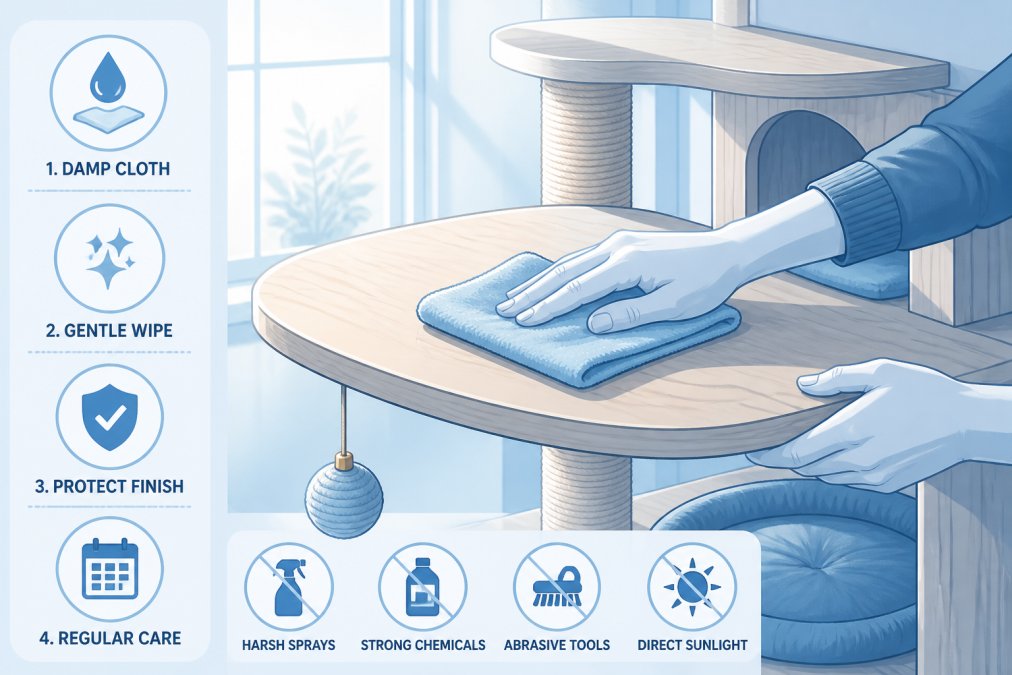
Start with regular dusting using a soft, dry cloth. Weekly dusting takes five minutes and dramatically extends the life of the finish.
For deeper cleaning, use a slightly damp cloth with mild soap and water. Wring out excess water, you want the cloth damp, not wet. Wipe surfaces gently in the direction of the grain, then dry immediately.
Address spills and accidents immediately. Cat urine is particularly damaging if left to sit. Blot the area with paper towels, then clean with a damp cloth and mild soap. Dry thoroughly.
Avoid harsh chemicals and abrasive cleaners, which damage protective finishes and can be toxic to cats. Stick with mild soap and water for routine cleaning.
Inspect for damage regularly. Look for soft spots, cracks, or areas where the finish is wearing through. Catching these issues early allows for targeted repair rather than replacement.
Consider placement environment. Direct sunlight can fade finishes and cause wood to warp. Humid environments encourage mold growth on fabric components. Position your cat tree away from extreme conditions.
Space-Saving Designs for Apartments and Small Rooms
Urban living creates specific constraints for cat furniture. The best aesthetically pleasing cat trees for apartments maximize vertical territory without consuming excessive floor space.
Vertical architecture is the solution. Rather than spreading out horizontally, space-saving designs emphasize height. A tall, narrow cat tree uses minimal floor space while providing abundant climbing opportunities. The Modern Litter Box Enclosure with Scratching Pad at $179.95 demonstrates this principle with a compact footprint that fits seamlessly into corner spaces.
Multi-functional pieces solve the space problem entirely. A cat tree that doubles as a side table, storage unit, or litter box enclosure provides dual value. The Hidden Cat Litter Box Enclosure with Shelves & Doors at $239.95 exemplifies this approach, functioning as a decorative cabinet while serving your cat's needs.
Color and finish selection matter more in smaller spaces. Light finishes (white, natural wood tones) make spaces feel larger and less cluttered. Dark finishes can make a room feel cramped.
Minimalist design principles apply directly to space-saving cat trees. Clean lines, uncluttered surfaces, and functional design reduce visual noise. The best space-saving designs deliver feline function with minimal visual impact.
How We Evaluated These Cat Trees
Our evaluation process prioritizes real-world performance alongside design merit. We assessed each piece across multiple dimensions to ensure recommendations serve both human and feline needs.
Stability testing comes first. We evaluated base design, weight capacity specifications, and construction quality. We examined internal bracing, material composition, and engineering approaches to determine whether pieces would remain stable under active use.
Aesthetic integration received significant weight. We considered how each piece functions within contemporary home design. Does it complement modern furniture or clash with it? Can it function as legitimate home decor?
Material durability informed our assessment. We evaluated whether materials would withstand months of daily cat use without excessive wear, matting, or degradation.
Functionality for cats was equally important. Does the piece provide genuine vertical territory? Are platforms sized appropriately? Does it encourage natural climbing and scratching behaviors?
Practicality for humans mattered throughout. We considered assembly difficulty, cleaning requirements, and maintenance needs.
The Bentley's Bark curation process applies these same standards. Every product goes through rigorous evaluation to ensure it delivers on both aesthetic appeal and functional value. We refuse to stock pieces that compromise on either dimension.
Finding the right aesthetically pleasing cat tree means balancing your cat's behavioral needs with your own design preferences. The pieces highlighted demonstrate that this balance is entirely achievable. Bentley's Bark curates cat furniture that integrates seamlessly into your home while providing the vertical territory, scratching surfaces, and perches your cat needs. With complimentary shipping on every order and our hand-picked selection focused on clean design and honest materials, upgrading your cat's environment doesn't require compromise on aesthetics or quality.
Frequently Asked Questions
What makes a cat tree aesthetically pleasing?
An aesthetically pleasing cat tree combines clean lines, neutral colors, and quality materials like solid wood or sisal that complement home decor. It should feel like furniture rather than a pet accessory, with vertical territory that respects your interior design while giving cats the climbing structure and perches they need. Minimalist designs, modern finishes, and thoughtful proportions make the difference between a piece that clashes and one that enhances your space.
Are modern cat trees as sturdy as traditional carpeted ones?
Yes, when built with proper materials and weight capacity. Modern aesthetically pleasing cat trees often use solid wood frames and reinforced bases that provide excellent stability. The key is checking the weight capacity and base design, a sturdy wooden cat tree with a wide, weighted foundation can support multiple cats safely. Traditional carpeted towers sometimes hide structural weaknesses, so modern designs that prioritize both form and function often outperform older styles in durability and stability.
How do I choose a cat tree that matches my home decor?
Consider your existing furniture finish and color palette. Wooden cat trees in white, espresso, or natural oak integrate easily into most homes. Measure your space to ensure the tree fits without overwhelming the room, tall trees work in open areas, while compact designs suit apartments. Look for designs that echo your furniture style: minimalist frames for modern homes, vintage finishes for eclectic spaces. The best aesthetically pleasing cat trees serve double duty as functional pet furniture and home decor elements.
What are the best materials for a durable, stylish cat tree?
Solid wood and particle board with metal hardware provide durability and aesthetic appeal. Sisal rope resists scratching better than carpet and looks more contemporary. Faux fur adds comfort while remaining easy to clean. Non-toxic finishes ensure safety for your cat. Quality hinges and secure joints prevent wobbling. The combination of these materials creates cat trees that satisfy feline instincts for scratching and climbing while maintaining the clean, modern look that fits seamlessly into your home.
This article was written using GrandRanker