

Are Heated Pet Beds Worth It for Winter?
Quick Summary
Heated pet beds are worth it for winter only for seniors, arthritic animals, thin-coated breeds, and cats that seek out warm spots. For a healthy adult dog with a thick coat in a heated home, a quality insulated bed does the same job for less money.
- A heated pet bed uses a low-wattage element controlled by a thermostat; a self-warming bed reflects the pet's own body heat.
- Check the bed's surface temperature by hand before each use, and unplug it when you're not home.
- A 40-watt bed running 8 hours a day at 15 cents per kilowatt-hour costs roughly $1.44 a month.
- Puppies and known chewers should get non-electric beds only, since a power cord is a chew target.
- A fleece bed and coral fleece blanket cover most pets' warmth needs for well under the cost of an electric bed.
Table of Contents
- Are Heated Pet Beds Worth It for Winter? The Honest Answer
- Heated Pet Bed vs Self-Warming Bed: What's the Real Difference?
- Heated Dog Bed Safety: What Every Pet Parent Should Know
- Heated Pet Bed Electricity Use: What It Actually Costs to Run
- Heated Cat Beds for Winter: Do Cats Need the Extra Warmth?
- Who Benefits Most: Senior Pets, Arthritic Joints, and Cold-Sensitive Breeds
- Non-Electric Warmth That Works: Beds and Blankets Worth Buying
- Choosing the Right Warm Bed for Your Pet and Your Home
- Frequently Asked Questions
Are Heated Pet Beds Worth It for Winter? The Honest Answer
Last Updated: October 25, 2026
Heated pet beds are worth it for winter only for a specific group: seniors, arthritic animals, thin-coated breeds, and cats that seek out warm spots.
At Bentley's Bark, we'd rather you buy the right bed once than the wrong one twice.
The case for warmth is real. The American Kennel Club's guidance on heated beds notes that warmth can ease sore muscles and stiff joints, but also warns that a dog can overheat and recommends a vet conversation before you buy.
Below, we break down powered versus self-warming beds, running costs, safety rules, and the non-electric options that outperform electric beds for most households.
Heated Pet Bed vs Self-Warming Bed: What's the Real Difference?
A heated pet bed uses electricity to generate warmth through a low-wattage internal element controlled by a thermostat. A self-warming bed generates no heat at all; it reflects the pet's own body heat back using insulating layers and a reflective inner surface.
The practical differences come down to four things:
- Power source: electric beds need an outlet; self-warming beds need nothing
- Temperature control: powered beds offer a thermostat or dual thermostat; self-warming beds rely on the pet's body heat
- Chew and cord risk: powered beds introduce a power cord; self-warming beds have no electrical components
Here's how the trade-offs stack up:
| Feature | Heated (Electric) Bed | Self-Warming Bed |
|---|---|---|
| Heat source | Internal element, thermostat-controlled | Reflected body heat |
| Best for | Senior, arthritic, cold-sensitive pets | Healthy adults, thick-coated breeds |
| Cord in the bed | Yes, needs supervision | None |
| Running cost | Small monthly electricity use | None |
| Indoor/outdoor use | Indoor only, away from moisture | Indoor or sheltered outdoor |
| Chew risk | Higher, cord must be protected | Minimal |
The honest verdict: a self-warming bed is a good default. A heated bed is a better tool when a pet genuinely struggles to stay warm on their own.
Heated Dog Bed Safety: What Every Pet Parent Should Know
Heated dog bed safety comes down to three risks: overheating, cord damage, and unsupervised use. Address all three and a heated bed is reasonable for the right pet; ignore them and you're inviting a vet visit.
Overheating is the risk owners underestimate.
Cord safety is the second issue. A power cord is a chew target for puppies and anxious dogs. Route it where a pet can't reach it, or skip electric entirely for a known chewer.
- Buy only beds with a thermostat or dual thermostat
- Check surface temperature by hand before each use
- Keep the cord out of reach or under a rug edge
Watch out: a heated bed with a frayed cord or a pet that chews is an electric shock risk. If the cord shows any damage, stop using the bed.
Heated Pet Bed Electricity Use: What It Actually Costs to Run
Heated pet bed electricity use is small, contrary to the assumption that electric beds are expensive to run. A typical heated pet bed draws very low wattage and cycles on and off via its thermostat rather than running continuously.
To estimate your own electricity cost, use this formula:
Monthly cost = (wattage ÷ 1,000) × hours used per day × your electricity rate × 30
For example, a 40-watt bed running 8 hours a day at 15 cents per kilowatt-hour costs roughly $1.44 a month; a 60-watt bed on the same schedule is about $2.16. Check your own bill for the per-kilowatt-hour figure. Most Canadian residential rates put a heated pet bed at a few dollars a month at most, not tens of dollars.
That number is almost irrelevant next to the purchase price and lifespan. Here's the comparison that actually answers whether a heated bed is worth it:
| Cost factor | Heated (electric) bed | Self-warming or insulated bed |
|---|---|---|
| Typical purchase price | Higher upfront, often two to four times a basic insulated bed | Lower upfront |
| Electricity | A few dollars a month at typical rates | None |
| Cord and component wear | Cord, thermostat, and element are the failure points; a chewed or frayed cord ends the bed's life early | No electrical parts to fail |
| Expected lifespan | Limited by electronics and chew risk; covers and cushions may outlast the element | Limited mainly by fabric and cushion compression |
| Cleaning | Cover washable on most models; the element itself is not | Fully washable on most models |
| Replacement risk | Higher, because one cord incident can retire the bed | Lower |
Electricity is the cheapest part of owning a heated bed. The expensive parts are the higher purchase price and the shorter lifespan when a cord, thermostat, or chew incident retires the bed.
Winter Pet Warm Sleeping Pad →
Heated Cat Beds for Winter: Do Cats Need the Extra Warmth?
Heated cat beds for winter suit some cats and are unnecessary for others.
Cats present a different safety profile: they burrow and stay put, so they may not move off a bed that's too warm.
A self-warming bed or a cozy enclosed kennel bed is often the smarter first step for a cat. It traps warmth without any power source.
Who Benefits Most: Senior Pets, Arthritic Joints, and Cold-Sensitive Breeds
The pets who benefit most from a heated bed are seniors, animals with arthritis or hip dysplasia, pets with circulation issues, and cold-sensitive thin-coated breeds. For these animals, warmth isn't a luxury; it's joint comfort and mobility support on cold mornings.
Here's how to match the bed to the need:
| Pet Profile | Warmth Need | Best Pick |
|---|---|---|
| Senior dog with stiff joints | High | Thermostat-controlled heated bed |
| Arthritic or hip dysplasia | High | Heated bed plus cushioned support |
| Thin-coated or small breed | Moderate to high | Heated or self-warming bed |
| Thick-coated adult dog | Low | Insulated or fleece bed |
| Healthy adult cat | Low | Self-warming or enclosed bed |
| Puppy or known chewer | Low, safety first | Non-electric bed only |
A practical decision guide by pet and environment:
- Age: Puppies and young adults generally run warm and don't need added heat; they also chew, which rules out cords. Senior pets lose body condition and often feel the cold more, so they're the strongest candidates for a heated bed.
- Coat: Double-coated breeds like huskies and malamutes are built for cold and rarely need electric warmth indoors. Thin-coated breeds, short-haired cats, and hairless varieties lose heat faster and benefit more.
- Health: Arthritis, hip dysplasia, and circulation problems are the clearest medical reasons to add warmth. A vet conversation before you buy is sensible, especially for pets with conditions that affect temperature regulation.
A common mistake is buying a heated bed for a young, healthy, double-coated dog. They run hot already, and you're adding cost and risk for no benefit.
Non-Electric Warmth That Works: Beds and Blankets Worth Buying
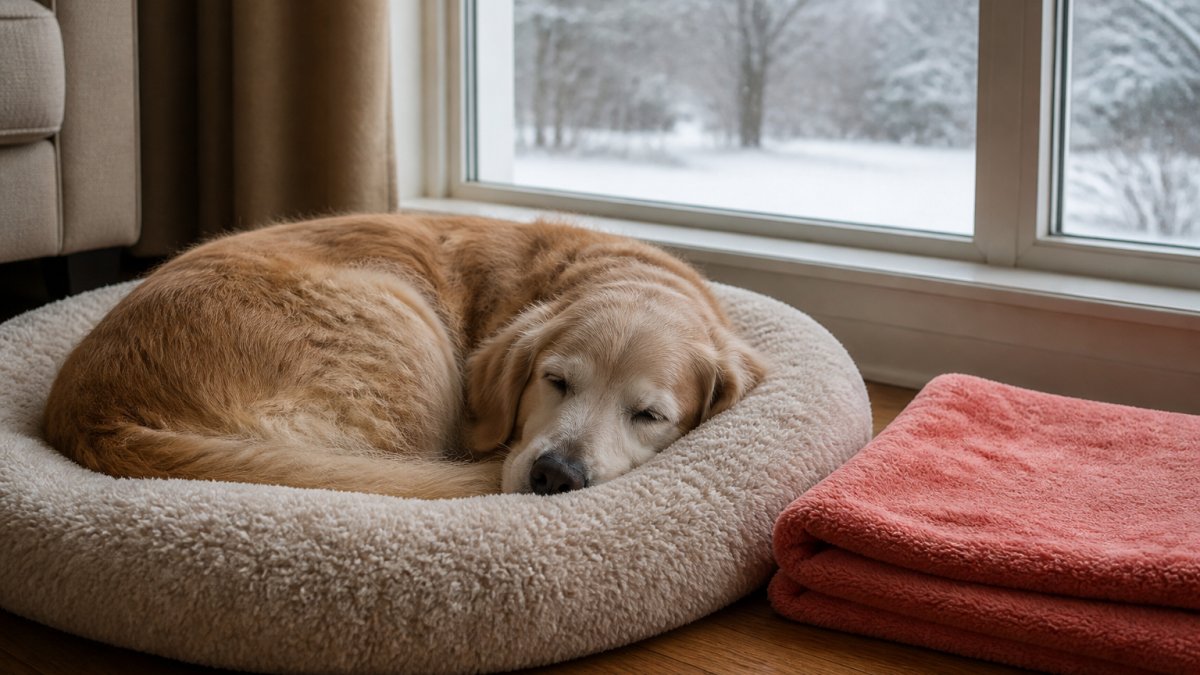
For most households, a well-insulated non-electric bed is a smart winter purchase, and we've built our winter range around that idea. These options trap body heat, add cushioning, and carry no cords, thermostats, or electrical risk.
Our picks, matched to the pet:
- Winter Pet Warm Sleeping Pad ($19.95): soft flannel in six sizes from 32 × 25 cm up to 91 × 70 cm, so it fits a small cat or a large breed. The simplest way to add a warm layer to an existing spot.
- Pet Blanket, Coral Fleece ($29.95): plush, machine-washable, and great for beds, crates, and couches. The lowest-cost way to add warmth anywhere your pet settles.
- Pet Bed, Dog Mat, and Crate Accessories ($39.95): adds cushioning and a non-slip base to crates and carriers, with machine-washable fabric.
For a pet that just needs a warmer sleeping area, a fleece bed and a coral fleece blanket cover it for well under the cost of an electric bed. A warm blanket is the simplest non-electric alternative, and you can browse the reversible soft and warm pet blanket ready to buy. You can also shop the Winter Pet Warm Sleeping Pad as another non-electric warmth option to buy right away. You can shop the Winter Pet Warm Sleeping Pad, browse the coral fleece blanket, or pick up the Cozy Four-Season Pet Kennel Bed if your pet prefers to burrow.
Choosing the Right Warm Bed for Your Pet and Your Home
Choosing the right warm bed comes down to matching three things: your pet's warmth need, your home's setup, and your tolerance for electrical risk.
A simple decision guide:
- Healthy adult, thick coat, heated home: insulated or fleece bed, no power needed
- Senior, arthritic, or cold-sensitive: thermostat-controlled heated bed, supervised
- Cat that burrows: self-warming or enclosed kennel bed first
Also consider bed size, a washable cover, and durability. If you're weighing premium pet furniture, our take on whether luxury dog furniture is worth it for small pets covers that decision in more depth.
The real question isn't whether heated pet beds are worth it. It's whether your specific pet needs one.
Bentley's Bark stocks a curated winter range with honest materials, machine-washable covers, and complimentary shipping on every order.
Frequently Asked Questions
Do heated dog beds use a lot of electricity?
Most heated dog beds draw between 20 and 60 watts, which is less than a standard light bulb. Running one for eight hours a night works out to roughly 0.16 to 0.48 kilowatt-hours, so the added cost on your hydro bill is usually a few dollars a month. Check the wattage on the label and compare it to your local electricity rate before you buy. A bed with a dual thermostat and auto shut-off uses less power than one that runs continuously.
Are heated pet beds safe to leave on overnight?
Many heated pet beds are designed for overnight use, but safety depends on the model and your pet. Look for a bed with a chew-resistant power cord, a thermostat that caps surface temperature, and automatic shut-off. The American Kennel Club advises consulting your veterinarian before buying a heated bed, since a dog can overheat even in cool weather. Place the cord where it cannot be chewed, and give your pet the option to move off the bed if it gets too warm.
Do self-warming pet beds really work?
Self-warming beds use reflective layers and insulating materials to bounce your pet's own body heat back toward them. They do not generate heat, so they add warmth rather than create it. For most healthy dogs and cats in a heated home, that is enough. They cost less to buy, use no electricity, and carry no burn or shock risk. In an unheated room or for a pet with arthritis, a self-warming bed may not be enough on its own, and a heated bed or a fleece blanket layered on top can help.
Which pets benefit most from a heated bed?
Senior pets, pets with arthritis or hip dysplasia, and animals with circulation issues get the most from added warmth, since heat can ease stiff joints and sore muscles. Small breeds, short-haired cats, and pets that shiver easily also benefit. The American Kennel Club notes that a heated bed may help with sore muscles and stiff joints, but recommends a vet check first. Healthy, active dogs in a warm home usually do fine with a cushioned bed and a fleece blanket.
