

Alternatives to Plastic Pet Water Fountains for Cats
Table of Contents
- Why Pet Parents Are Moving Away From Plastic Water Fountains
- Ceramic Cat Water Fountains: Durability and Hygiene Benefits
- Stainless Steel Cat Water Fountains: The Premium Choice
- Cat Water Bowl Versus Fountain: When a Simple Bowl Makes Sense
- Faucet-Connected Cat Water Fountains: Plumbed Water Solutions
- Total Cost of Ownership: Beyond the Upfront Price
- Choosing the Right Option for Your Cat's Hydration Needs
- Frequently Asked Questions
Last Updated: October 18, 2026
Why Pet Parents Are Moving Away From Plastic Water Fountains
Plastic water fountains have dominated the cat hydration market for years. They're affordable, lightweight, and easy to find. But pet parents increasingly recognize their limitations. Plastic holds onto bacteria, develops slimy biofilm buildup, and can leach chemicals over time. Many cat owners are now exploring alternatives to plastic pet water fountains for cats that offer better hygiene, durability, and peace of mind.
Ceramic and stainless steel options have emerged as serious contenders. Some pet parents are even reconsidering whether a fountain is necessary at all.
The decision to move away from plastic isn't complicated. Cats evolved drinking from moving water sources. Modern fountains replicate that instinct. But the vessel matters as much as the motion. This guide breaks down your real options, what each costs over time, and which setup makes sense for your specific cat.
Ceramic Cat Water Fountains: Durability and Hygiene Benefits
A ceramic cat water fountain is a glazed vessel designed to hold circulating water, typically powered by an electric pump, with a non-porous surface that resists bacterial colonization better than plastic. Ceramic fountains address the core hygiene problem: they don't absorb water or harbor biofilm the way porous materials do.
Ceramic's non-porous surface makes it genuinely easier to keep clean. Bacteria and algae struggle to establish themselves on glazed ceramic. You can see buildup forming and remove it immediately. The material doesn't degrade from repeated washing or dishwasher cycles. Over months of daily use, ceramic maintains its integrity while plastic becomes discolored and worn.
The trade-off is weight and fragility. Ceramic fountains are heavier, harder to move around your home. If your cat knocks it over, it can crack or break. Some cats also find the material less appealing aesthetically. A ceramic fountain doesn't blend into modern decor the way a sleek stainless steel option might.
Cleaning a ceramic fountain takes about 10 minutes weekly. Disassemble the pump, rinse the basin, wipe the interior surfaces, and reassemble. The ceramic surface accepts a soft brush without damage. Many ceramic fountains are dishwasher-safe, though hand washing extends their lifespan.
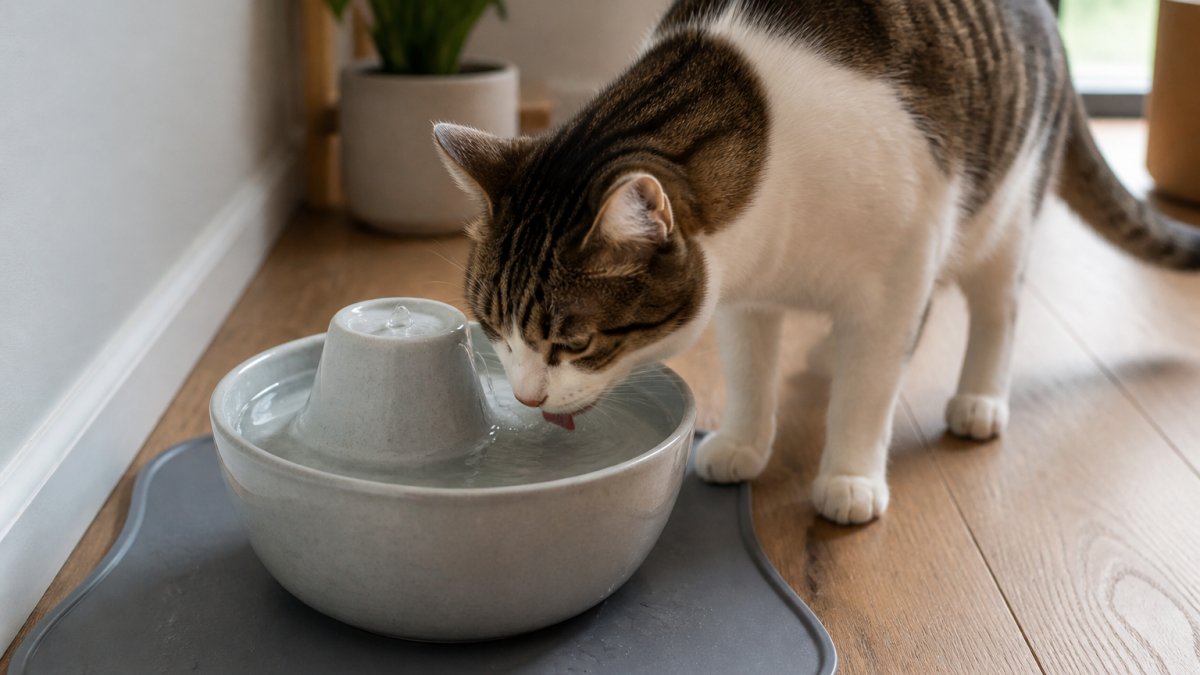
Ceramic fountains typically cost between $45-$85 CAD upfront. Filter replacements run $8-$15 per unit, needed every 4-6 weeks depending on water hardness and your cat's drinking volume. Over a year, expect $100-$150 in filter costs. The total first-year investment sits around $150-$235 CAD.
Stainless Steel Cat Water Fountains: The Premium Choice
Stainless steel water fountains represent the premium option for alternatives to plastic pet water fountains for cats. Stainless steel is non-porous, durable, and maintains temperature stability, cold water stays cold longer than in plastic or ceramic. The material is virtually indestructible for household use.
Stainless steel's reflective surface appeals to aesthetically conscious pet parents. It fits seamlessly into modern kitchens and minimalist home designs. Unlike ceramic, it won't shatter if knocked over. The material is also lighter than ceramic, making it easier to move and reposition.
Cleaning stainless steel requires minimal effort. The smooth, non-porous surface resists staining and bacterial growth. A quick rinse and wipe keeps it spotless. Most stainless steel fountains are fully dishwasher-safe. The double-wall insulation on Bentley's Bark's Stainless Steel Pet Bowl keeps water at a steady temperature while resisting rust and wear.
The primary drawback is cost. Stainless steel fountains start around $60-$120 CAD and climb higher for premium brands. Filter replacements ($10-$18 per unit) are needed every 4-8 weeks. Annual filter costs run $120-$200 CAD. First-year total investment reaches $180-$320 CAD.
Stainless steel's durability offsets the higher price. These fountains often last 5-7 years with minimal maintenance. If you're planning to keep the same fountain for multiple cats or across several years, the per-year cost becomes competitive with cheaper alternatives that need replacement sooner.
| Feature | Ceramic | Stainless Steel | Plastic |
|---|---|---|---|
| Non-porous surface | Yes | Yes | No |
| Dishwasher-safe | Most | Yes | Some |
| Durability (years) | 3-5 | 5-7 | 1-3 |
| Upfront cost | $45-$85 | $60-$120 | $25-$50 |
| Annual filter cost | $100-$150 | $120-$200 | $80-$120 |
| Weight | Heavy | Medium | Light |
| Aesthetic appeal | Traditional | Modern | Functional |
Cat Water Bowl Versus Fountain: When a Simple Bowl Makes Sense
Not every cat needs a fountain. Some cats prefer still water. Others drink adequately from a simple bowl. The choice between a fountain and a traditional water bowl depends on your cat's hydration patterns and your household setup.
Cats with low water intake benefit from fountains. The motion and sound trigger drinking instincts. Cats that ignore still water often respond to circulating water. If your cat drinks noticeably more when water is moving, a fountain solves a real hydration problem.
Cats that already drink well from bowls don't need a fountain. Adding one creates unnecessary complexity. A high-quality ceramic or stainless steel bowl, refreshed 2-3 times daily, meets their needs perfectly. Bentley's Bark's Double Bowls Pet Feeder Container combines food and water in a single, easy-to-maintain setup at $19.95 CAD, eliminating the need for separate dishes.
Simple bowls cost far less than fountains. A quality ceramic or stainless steel bowl runs $15-$50 CAD with zero ongoing filter costs. The trade-off is maintenance frequency. You'll refill and rinse the bowl multiple times daily to keep water fresh. Many pet parents find this routine manageable and prefer the simplicity.
Fountains require electricity, pump maintenance, and filter replacements. If your cat is content with a bowl, you're adding complexity for no practical benefit. The decision hinges on one question: does your cat drink more when water is moving? If yes, a fountain pays for itself in improved hydration. If no, a bowl is the smarter choice.
Faucet-Connected Cat Water Fountains: Plumbed Water Solutions
Faucet-connected fountains represent the most hands-off alternative to plastic pet water fountains for cats. These systems attach directly to your kitchen or bathroom sink, supplying a continuous flow of fresh water without filters or electricity.
The appeal is obvious: unlimited fresh water with zero filter replacement costs. Your cat gets genuinely circulating water, not recirculated water from a basin. The system requires no daily refilling. Over months and years, the savings in filters and electricity add up significantly.
Double Bowls Pet Feeder Container for Cats and Dogs →
The limitation is installation. You need access to a sink with an appropriate faucet connection. Apartment dwellers or homes with non-standard plumbing may find these systems impractical. The initial setup involves attaching a diverter valve to your faucet, then running tubing to the fountain location. For renters, this often isn't an option.
Faucet fountains also create a dependency: if your water supply is interrupted, the fountain stops working. They're not portable, you're committed to a specific location. If your cat prefers a fountain in a different room, you're out of luck.
Cost varies widely. Basic faucet adapters run $30-$60 CAD. Premium systems with flow control and overflow management cost $60-$100 CAD. There are no ongoing filter costs, making the total cost of ownership the lowest of any fountain option over 3-5 years. However, the upfront installation complexity and plumbing requirements make these systems best suited for homeowners with stable, predictable household setups.
Total Cost of Ownership: Beyond the Upfront Price
Comparing alternatives to plastic pet water fountains for cats requires looking past the initial purchase. Filter costs, electricity, replacement parts, and lifespan all factor into what you actually spend.
A basic plastic fountain costs $25-$50 CAD upfront but needs replacement every 12-18 months due to material degradation. Filters cost $80-$120 annually. Over five years, you'll buy 3-4 fountains and spend $400-$600 CAD total. The per-year cost is $80-$120 CAD.
A ceramic fountain costs $45-$85 upfront with $100-$150 in annual filter costs. Over five years, you'll spend $550-$835 CAD total, or $110-$167 per year. Ceramic's longer lifespan (3-5 years) means you buy fewer units, offsetting the higher per-unit price.
Stainless steel fountains cost $60-$120 upfront with $120-$200 in annual filter costs. Over five years, you'll spend $660-$1,120 CAD total, or $132-$224 per year. However, stainless steel fountains last 5-7 years, so your actual replacement cycle might extend to six or seven years, lowering the annual average.
A simple ceramic or stainless steel water bowl costs $15-$50 CAD with zero ongoing costs. Over five years, you'll spend $15-$50 CAD total. The trade-off is time, you're refreshing the bowl 2-3 times daily. If you value convenience over cost, that time investment matters.
Faucet-connected systems cost $30-$100 CAD upfront with zero ongoing costs. Over five years, you'll spend $30-$100 CAD total. If your plumbing allows installation, this is the lowest total cost option by far. The barrier is installation complexity, not affordability.
Choosing the Right Option for Your Cat's Hydration Needs
The best alternative to plastic pet water fountains for cats depends on three factors: your cat's drinking preferences, your budget, and your household setup.
Choose a ceramic fountain if your cat drinks more from moving water and you prioritize hygiene. Ceramic resists bacterial growth and handles frequent washing without degrading. The material is durable enough to last 3-5 years.
Choose a stainless steel fountain if aesthetics matter and you want maximum durability. Stainless steel fits modern home design, resists rust, and lasts 5-7 years. The higher upfront cost becomes economical over time. Budget $180-$320 CAD for the first year, then $120-$200 annually for filters.
Choose a simple bowl if your cat drinks adequately from still water and you prefer simplicity. Refresh the bowl 2-3 times daily with fresh water. Pair it with Bentley's Bark's Silicone Pet Food Mat at $19.95 CAD to prevent spills and keep your floors clean.
Choose a faucet-connected system if you have plumbing access and want the lowest total cost of ownership. These systems eliminate filter costs entirely. Budget $30-$100 CAD upfront, then nothing for five years.
For cats that drink inconsistently or show signs of low water intake, a fountain is worth the investment. For cats that drink reliably from bowls, a fountain adds unnecessary complexity. The decision is data-driven: observe your cat's drinking patterns for a week.
Moving away from plastic doesn't mean you're abandoning convenience. Ceramic and stainless steel fountains are easier to maintain than plastic, they resist bacterial growth and handle frequent washing. At Bentley's Bark, we believe your cat's hydration setup should prioritize material safety and water freshness without sacrificing practicality.
Frequently Asked Questions
Is there a cat fountain that doesn't use plastic?
Yes. Ceramic and stainless steel cat water fountains are durable non-plastic alternatives that resist bacterial buildup better than plastic. Ceramic fountains offer a natural aesthetic, while stainless steel fountains maintain water temperature and resist rust. Both require regular cleaning but eliminate concerns about plastic degradation and chemical leaching into drinking water.
Are ceramic cat water fountains easier to clean than plastic ones?
Ceramic fountains have some advantages for cleaning: they resist slimy buildup better than plastic and don't retain odors as easily. Stainless steel is actually the easiest to clean and sanitize, as it's non-porous and dishwasher-safe. All non-plastic fountains require consistent maintenance to prevent bacterial growth.
What can I use instead of a cat water fountain?
A stainless steel or ceramic water bowl paired with a food-grade silicone mat works well for cats that prefer still water. The Stainless Steel Pet Bowl at $48.33 keeps water cool longer with double-wall insulation. For cats that prefer running water, faucet-connected fountains or ceramic alternatives provide motion without plastic. Regular bowls cost less upfront but require more frequent water changes to keep water fresh.
How often should a cat water fountain be cleaned?
Non-plastic fountains should be cleaned at least twice weekly to prevent bacterial and algae buildup. Ceramic and stainless steel fountains are easier to disassemble and sanitize than plastic models. Weekly deep cleaning with hot water removes slimy residue, while daily water changes keep the supply fresh. Stainless steel fountains are dishwasher-safe, making maintenance faster and more thorough than hand washing.