

Smart Pet Tech: A 2026 Guide to How It Works
Table of Contents
- What Is Smart Pet Tech and Why It Matters
- How Smart Pet Technology Works: The Core Components
- Benefits of Automated Pet Feeders
- Smart Pet Cameras and Remote Monitoring
- Pet Tech Privacy and Data Security Essentials
- GPS Tracking, Geofencing, and Pet Safety
- Health and Wellness Monitoring Through Wearables
- Smart Home Integration and Automated Care
Last Updated: August 28, 2026
What Is Smart Pet Tech and Why It Matters
Smart pet tech refers to connected devices and systems that use WiFi, sensors, and mobile applications to automate, monitor, and enhance pet care. These range from automated feeders to wearable health trackers, GPS locators, and remote cameras. At Bentley's Bark, we've curated these technologies because they solve real problems: they keep pets safer, healthier, and better cared for when you're away.
Pet parents today want visibility into their pet's life during work hours. A smart feeder confirms your dog ate breakfast. A pet camera lets you check in remotely. A GPS collar means you'll find your cat if it escapes. What makes this technology "smart" is the connectivity layer, unlike a traditional timer feeder, a smart feeder connects to your home WiFi, syncs with a mobile app, and sends notifications. You control it remotely and see what's happening in real time. The market has grown significantly because it addresses a genuine gap: most pet owners spend their day away from home, yet they care deeply about their pet's wellbeing.
How Smart Pet Technology Works: The Core Components
Smart pet technology operates through an interconnected system of hardware, connectivity, data processing, and user interfaces.
WiFi Connectivity and Mobile Apps
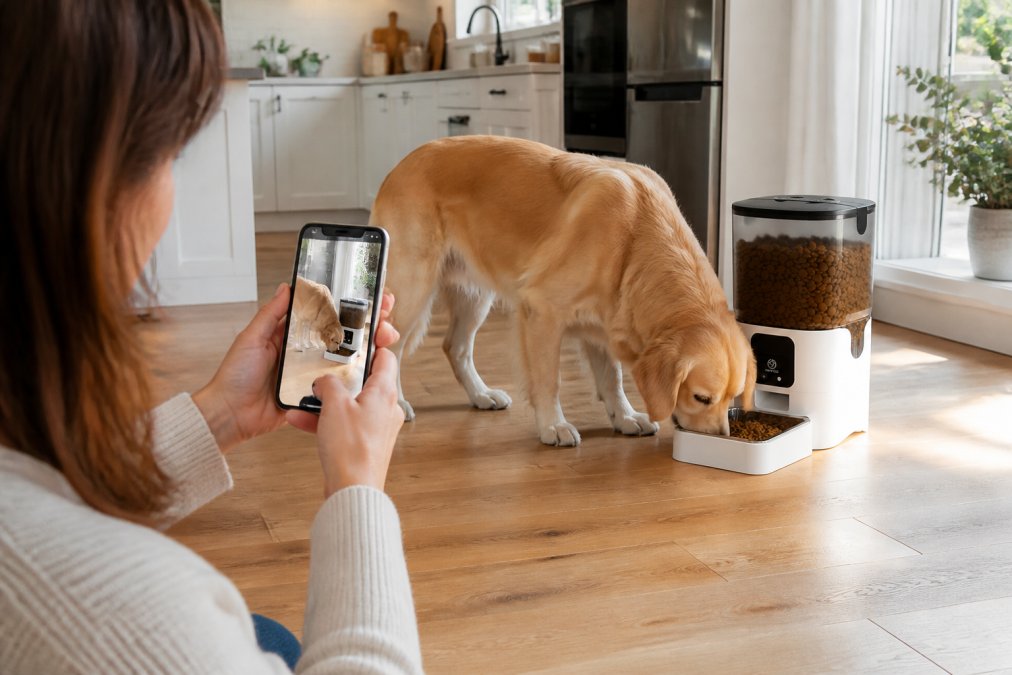
Every smart pet device relies on WiFi to function. The device connects to your home network, communicates with cloud servers, and syncs with your smartphone app. When you open the Bentley's Bark 6L Smart Automatic Pet Feeder with WiFi & Camera app, your phone sends a request through the internet to the device's cloud server, which retrieves feeding schedules, activity data, and camera footage. When you tap "dispense food now," the command travels back to your device, which immediately releases kibble.
The mobile app is your control center: schedule feeding times, adjust portions, view camera feeds, receive alerts, and review eating history. A well-designed app makes this intuitive; a poorly designed one creates frustration.
Sensors and Data Collection
Smart pet devices embed multiple sensor types to collect information about your pet's behavior and health. An automated feeder contains a weight sensor that detects when food is dispensed and consumed. Pet wearables include accelerometers to track movement, heart rate monitors, and temperature sensors. GPS trackers use satellite positioning and cellular networks to pinpoint location.
These sensors generate continuous data streams. A smart feeder logs every meal: when it was dispensed, how much was eaten, whether the pet finished it. Over weeks and months, patterns emerge, your cat eats faster on certain days or your dog's appetite changes seasonally. Appetite changes can signal illness before other symptoms appear.
Cloud-Based Storage and Real-Time Alerts
Data collected by your smart pet device travels to cloud servers maintained by the manufacturer. Real-time alerts prove the technology's value: your phone buzzes "Your dog didn't eat breakfast." You check the camera and see he's sleeping soundly, probably just not hungry. But if this pattern continues for three days, you know something's wrong and call your vet.
Cloud storage means you can access months of feeding history, activity logs, and video footage from anywhere. However, this convenience comes with a trade-off: your pet's data lives on someone else's servers, raising security and privacy concerns.
Benefits of Automated Pet Feeders
Automated feeders solve specific problems that traditional feeding methods don't address. The most obvious benefit is consistency, a smart feeder dispenses the exact same portion at the exact same time every day, eliminating guesswork and variation.
Consistency matters for weight management. Overfeeding is one of the most common causes of obesity in pets, leading to joint problems, diabetes, and shortened lifespan (Canadian Veterinary Medical Association). A feeder that portions meals precisely prevents accidental overfeeding. If your dog normally gets 1.5 cups per day, the feeder delivers exactly that.
The second benefit is convenience for multi-pet households. If you have a dog and a cat with different dietary needs, a smart feeder lets you schedule meals separately. The dog eats at 7 AM, the cat at 8 AM, without your presence.
The third benefit is peace of mind when you're away. If you're stuck at work longer than expected or traveling, the feeder continues on schedule. Your pet doesn't go hungry, and you can even dispense extra food remotely if needed.
The Bentley's Bark 5.5L Programmable Pet Feeder for Cats and Dogs addresses a common pain point: feeding multiple animals with different portion sizes. One limitation: automated feeders work best for dry food. Wet food clogs hoppers and spoils quickly.
Smart Pet Cameras and Remote Monitoring
Pet cameras let you see what your pet does when you're not home. A camera might show that your dog paces anxiously for the first 20 minutes after you leave, a sign of separation anxiety. Knowing this, you can address the problem through gradual desensitization, medication, or hiring a dog walker.
Cameras with two-way audio let you talk to your pet remotely. Some pet parents use this to give commands or comfort an anxious animal; others use it to deter unwanted behavior. If your cat jumps on the counter while you're at work, you can say "no" through the camera.
The best pet cameras include night vision for dark visibility and record video continuously or on motion detection, storing footage in the cloud. This creates a searchable archive of your pet's daily life.
The built-in camera on the Bentley's Bark 6L Smart Automatic Pet Feeder with WiFi & Camera combines feeding automation with visual monitoring, confirming meals are happening and giving early warning if appetite changes.
Pet Tech Privacy and Data Security Essentials
Smart pet devices collect intimate data about your home and your pet's behavior. This data is valuable to manufacturers and attractive to bad actors. You need to understand the security model before committing to any device.
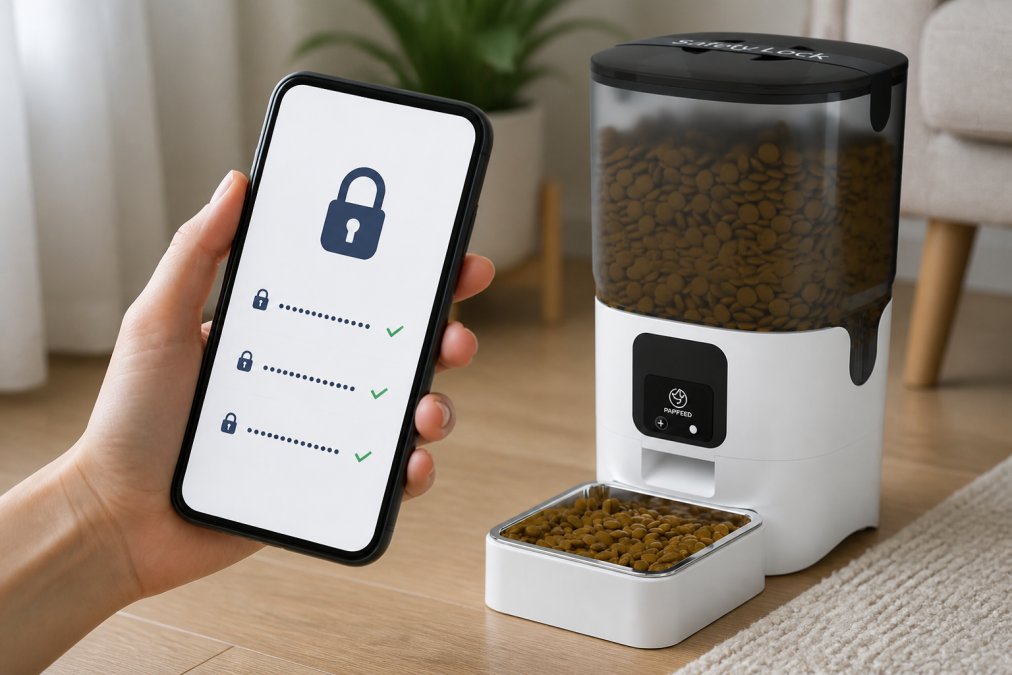
Most smart pet devices store data in cloud servers. That data travels across the internet multiple times daily: from your device to the cloud, from the cloud to your phone, and back again. Each handoff is a potential vulnerability. If the manufacturer uses weak encryption, a hacker could intercept your pet's location data, camera footage, or feeding schedule.
Ask these questions before buying any smart pet device:
Does the manufacturer encrypt data in transit? Data should be encrypted using industry-standard protocols (TLS 1.2 or higher) when traveling over the internet.
Does the manufacturer encrypt data at rest? Data should be encrypted while sitting on their servers, preventing internal bad actors or hackers who breach the server from reading your information.
What's their data retention policy? How long do they keep your pet's video, location history, and feeding logs? Longer retention means more data to protect.
Do they sell or share your data? Read the privacy policy carefully. Some manufacturers monetize user data by selling it to third parties or using it to train AI models.
Does the device work offline? Some smart feeders and cameras require constant internet connectivity. Others cache data locally and sync when the connection returns. Local caching is more secure.
GPS Tracking, Geofencing, and Pet Safety
GPS tracking devices attach to your pet's collar and transmit their location via satellite and cellular networks. If your pet escapes, you pull out your phone and see exactly where they are instead of searching your neighborhood blindly.
Geofencing adds automation. You define a boundary on the app, say, your property or a one-block radius around your home. If your pet leaves that boundary, you get an alert.
GPS trackers work anywhere with cellular coverage, making them ideal for pets that travel with you. The limitation is battery life, GPS trackers typically need charging every 5-7 days (peer-reviewed research on GPS tracker battery life). Additionally, GPS accuracy varies depending on sky visibility and signal strength; urban canyons and dense forests reduce accuracy.
Real-time tracking also raises privacy questions. Your pet's location is logged continuously, creating a detailed map of everywhere they go. Ensure the manufacturer protects this data with strong encryption and clear retention policies.
Health and Wellness Monitoring Through Wearables
Pet wearables monitor activity levels, sleep patterns, heart rate, and body temperature. This data provides early warning of health problems. A pet wearable might detect that your dog's activity level has dropped by 40% over two weeks, signaling pain, illness, or depression. Catching it early means your vet can intervene before the problem becomes serious.
Sleep monitoring reveals whether your pet is resting adequately. Disrupted sleep can indicate anxiety, pain, or environmental stress. Heart rate monitoring detects irregular rhythms that might warrant a veterinary checkup.
The challenge with wearables is accuracy. Consumer-grade sensors are less precise than clinical equipment. A wearable might show your pet's heart rate as 85 BPM when it's actually 92 BPM. This margin of error is usually acceptable for trend analysis, you're looking for significant changes, not exact numbers, but wearables complement veterinary care; they don't replace it.
Wearables also require consistent wear. If your pet refuses the collar or you remove it frequently, the data becomes incomplete and less useful.
Smart Home Integration and Automated Care
The most sophisticated smart pet tech integrates with your broader smart home ecosystem. Your smart feeder can communicate with your smart lights, thermostat, and security system. Imagine this workflow: when you leave work, your phone's location triggers geofencing. Your smart home system receives this signal and automatically feeds your pet 30 minutes before you arrive, opens a smart pet door, and adjusts the thermostat to a comfortable temperature.
Integration also means you can control pet devices through voice assistants. "Alexa, feed the dog" becomes a voice command instead of opening an app.
The downside is complexity. More integrations mean more potential points of failure. If your WiFi drops, your smart home automation stops working. Simpler is often more reliable.
Bentley's Bark focuses on products that solve individual problems well rather than requiring complex ecosystem integration. The 6L Smart Automatic Pet Feeder with WiFi & Camera works standalone or integrates with your smart home if you choose.
Smart pet tech has matured from novelty to genuinely useful. The devices that work best address specific pain points: keeping your pet fed on schedule, letting you monitor them remotely, or locating them if they escape.
When evaluating smart pet tech, prioritize reliability and security over feature count. A feeder that works 99% of the time is infinitely better than one with 10 features that works 80% of the time. Bentley's Bark has hand-selected smart pet devices that balance functionality with dependability, and every order ships with complimentary shipping. Start with one device that solves your biggest problem, then expand from there as you learn what works for your household.
| Feature | Benefit | Best For |
|---|---|---|
| Automated feeding | Consistent portions, weight management | All pets, especially those prone to overeating |
| Pet cameras | Remote monitoring, behavioral insights | Separation anxiety, multi-pet households |
| GPS tracking | Location recovery, geofencing alerts | Outdoor pets, escape-prone animals |
| Health wearables | Early illness detection, activity trends | Senior pets, health-conscious owners |
| Smart home integration | Automated workflows, voice control | Tech-forward households |
Frequently Asked Questions
What is smart pet tech and how does it benefit my daily routine?
Smart pet tech refers to IoT-enabled devices that automate and monitor pet care through WiFi connectivity and mobile apps. Automated feeders dispense meals on schedule, cameras let you check on your pet remotely, and activity trackers monitor health metrics. These devices reduce manual tasks, provide peace of mind when you're away, and help maintain consistent routines even during busy days or travel.
How do smart pet feeders work, and what are the main benefits of automated pet feeders?
Smart feeders use WiFi connectivity and mobile apps to schedule meals and portion sizes precisely. Benefits of automated pet feeders include portion control to prevent overeating, consistent feeding times even when you're at work, the ability to dispense food remotely, and built-in cameras to watch your pet eat. Many models store feeding history in cloud-based storage, helping you track your pet's eating patterns and identify health changes early.
Are smart pet devices secure, and what should I know about pet tech privacy and data security?
Pet tech privacy and data security depends on the manufacturer's encryption standards and data handling practices. Look for devices with encrypted WiFi connections, secure login credentials, and transparent privacy policies. Check whether the company stores data locally or in the cloud, and verify they don't share your pet's information with third parties. Regularly update firmware, use strong passwords, and review app permissions to protect your home network and personal data.
What types of smart pet technology should I prioritize for my home?
Prioritize based on your pet's needs and your lifestyle. If you work long hours, start with an automated feeder and camera for remote monitoring. For anxious pets, consider interactive toys or activity trackers. If your pet spends time outdoors, GPS tracking with geofencing provides safety. For health-conscious pet parents, wearable technology monitors sleep, activity levels, and biometric sensors track vital signs. Begin with one or two devices and expand as you discover what works best.
How does GPS tracking and geofencing keep my pet safe?
GPS tracking devices attach to your pet's collar and use satellite positioning to pinpoint their location in real time via your mobile app. Geofencing creates a virtual boundary around your home or a designated area. If your pet leaves this zone, the app sends instant alerts to your phone. This technology is especially valuable for escape-prone pets or outdoor cats, allowing you to locate them quickly and prevent loss or injury.
Can smart pet devices work if my WiFi connection is unreliable?
Most smart pet devices require stable WiFi for remote access and real-time alerts, but many have offline functionality. Automated feeders typically operate on local schedules even if WiFi drops, dispensing meals at programmed times without app control. Cameras may buffer or lose live feed during outages but often store recorded footage locally. If your home WiFi is unreliable, choose devices with offline modes, consider a mesh WiFi system to improve coverage, or select simpler programmable feeders that don't depend on constant connectivity.
What's the difference between smart pet cameras and traditional pet monitors?
Smart pet cameras connect via WiFi and offer live streaming, two-way audio, night vision, and integration with mobile apps for remote viewing from anywhere. Many include built-in motion detection, sound alerts, and cloud-based storage of recorded footage. Traditional monitors typically require a dedicated receiver unit and offer limited range and features. If you want to buy smart pet cameras online, look for models with high-resolution video, low-light performance, and compatibility with your existing smart home ecosystem for seamless integration.
This article was written using GrandRanker