

Pet Supplies Online vs In Store: Which Is Cheaper?
Table of Contents
- The Real Cost of Pet Supplies Online vs In Store
- A Like-for-Like Price Comparison Across Channels
- Total Cost at Checkout: Shipping, Taxes, and Minimum Orders
- Pet Supply Subscription Savings and Autoship Perks
- Local vs Big Box Pet Store Prices: Where the Gap Shows Up
- Finding the Best Online Pet Stores in Canada
- Returns, Freshness, and Delivery Reliability
- Which Shopping Method Fits Your Habits?
- Frequently Asked Questions
Last Updated: October 20, 2026
The Real Cost of Pet Supplies Online vs In Store
The answer depends less on the sticker price and more on what you buy, how often you buy it, and whether you can hit free shipping thresholds.
So is it cheaper to buy pet supplies online or in store? For most households, buying pet supplies online wins on total cost when you order in bulk and clear the free shipping minimum.
What the Sticker Price Leaves Out
Most price comparisons stop at the shelf tag. That is a mistake.
A bag of dog food priced lower in store can cost more once you add a fifteen-minute drive each way, fuel, and the treat you grab at checkout. An online price that looks higher may include free delivery straight to your door. The real number is the total cost at checkout, and it is the only figure worth comparing.
Three costs hide behind the sticker:
- Travel and time. Every in-store trip has a fuel and time cost that never appears on a receipt.
- Shipping and minimum orders. Many online retailers waive delivery above a set order value, so a small order can carry a fee that erases the savings.
- Impulse spending. Stores are designed to put toys and treats in your path. Online carts have the same pull, but you can leave a tab open and think about it.
A Like-for-Like Price Comparison Across Channels
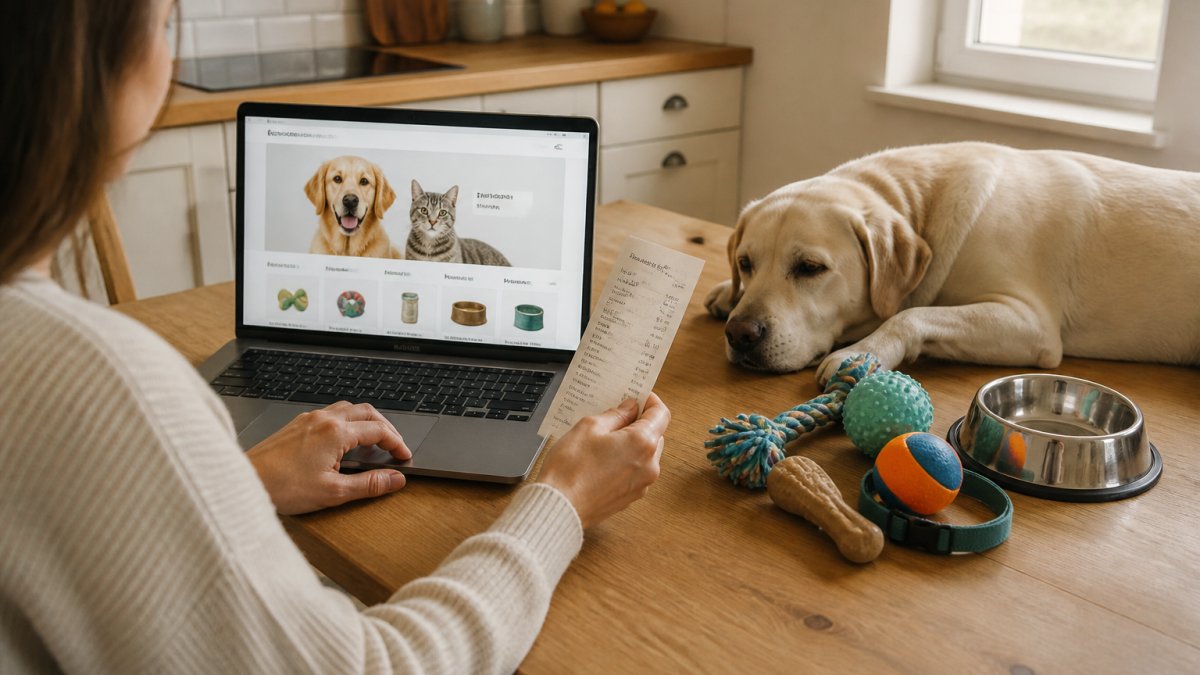
A fair comparison means matching the same product, the same size, and the same brand across channels. Compare a 12 kg bag of the same kibble, not a premium bag against a budget one. But a single item is not enough.
Build a Standardized Basket
Pick five to seven items you buy every month and record the same brand, size, and format in each channel. A practical basket looks like this:
- One large bag of dry food (same brand and weight)
- One case of wet food (same count and size)
- One durable item you buy rarely, such as a harness or toy
Write down the shelf price, the delivery fee, any autoship or loyalty discount, and the tax. The item with the biggest gap is rarely the one people expect.
Where the Gap Actually Shows Up
The pattern is consistent across most households:
| Category | Online economics | In-store economics |
|---|---|---|
| Dry food (large bag) | Lower base price and autoship discounts; heavy item can trigger delivery surcharges | Competitive on national brands; sales and clearance can beat online |
| Wet food (cases) | Bulk cases and subscribe-and-save discounts add up | Case pricing varies; shelf space limits variety |
| Litter (heavy) | Free shipping threshold matters most; surcharges common on very heavy bags | No delivery cost, but you carry it |
| Treats and chews | Wide selection and frequent promotions | Impulse-buy risk raises the real cost |
| Toys and enrichment | Endless catalog, but you cannot inspect | Hands-on inspection and same-day availability |
| Specialty and prescription diets | Selection depends on the retailer; some require vet authorization | Independent stores often stock niche and prescription lines |
The Category Rule
Food and litter reward bulk online orders because the per-unit price falls and delivery is free above a threshold. A single toy or a hard-to-find harness is often faster and no more expensive to buy locally.
What most comparisons miss is that the cheapest channel is not fixed. It moves with the item, the order size, and whether you can clear a free-shipping minimum.
Total Cost at Checkout: Shipping, Taxes, and Minimum Orders
The checkout total is where online shopping either wins or loses. A lower shelf price means nothing if delivery fees and minimum-order rules push the final number above the store price. The only figure worth comparing is the full delivered cost: item price plus shipping plus tax, minus any discount you actually qualify for.
Watch these line items:
- Shipping thresholds. Many online retailers offer free delivery only above a set order value. If your order falls short, the fee can wipe out the savings. The threshold is the single most important number in the online-versus-store math.
- Taxes. Sales tax applies the same way online and in store in most provinces, so it rarely changes the comparison. Confirm the rate at checkout rather than assuming.
- Minimum orders for subscription discounts. Some autoship programs require a minimum spend to unlock their discount, and some exclude certain brands.
- Delivery surcharges. Heavy items like large bags of litter or bulky furniture can carry extra fees even when the order clears the free-shipping threshold.
The Mechanisms That Move the Total
Four savings mechanisms change which channel is cheaper, and most comparisons ignore them:
- Autoship and subscribe-and-save. A recurring delivery discount, often in the range of a modest percentage, applies to items you buy on a schedule. It stacks with free shipping if the order clears the threshold.
- Price matching. Some retailers match a competitor's advertised price on an identical item. Ask before you buy; the policy usually requires the same brand, size, and current availability.
- Loyalty and rewards programs. Points, member pricing, and fuel-style rewards can shift the effective price by a few percent, which matters on recurring essentials.
A Worked Example
Suppose your basket totals $85 before tax and the free-shipping threshold is $99. Paying a delivery fee of roughly $10 to $15 erases most of the online savings. Adding a staple you will use within the month to clear the threshold is rational; adding a toy you do not need is not. If the basket already clears the threshold, online usually wins on total cost.
A practical rule: if your order clears the free shipping threshold, online usually wins. If it does not, either add a needed staple to reach the threshold or buy locally.
Pet Supply Subscription Savings and Autoship Perks
Pet supply subscription savings come from two places: a recurring discount on each delivery and the fuel and time you no longer spend driving to a store.
Subscriptions work best for predictable essentials. Set a delivery interval that matches how fast your pet actually goes through a bag, not how often you think you shop.
A few habits keep subscriptions honest:
- Review the interval every few months. A growing puppy eats more each month, so the right cadence changes.
- Check that the discount applies to the items you actually buy. Some programs exclude certain brands.
- Keep a small buffer. One extra week of food on hand protects you if a delivery is delayed.
For treats, toys, and enrichment items, subscriptions make less sense. Those are discretionary purchases where variety matters more than a recurring discount.
Local vs Big Box Pet Store Prices: Where the Gap Shows Up
Local vs big box pet store prices diverge most on two things: common brands and specialty items.
The gap is smallest on high-volume national brands and widest on:
- Prescription and veterinary diets
- Raw, freeze-dried, and limited-ingredient foods
- Specialty sizing for large or small breeds
Local stores also provide something a shelf tag cannot: staff who know the products and can answer questions about ingredients, sizing, and fit.
Our honest take: buy your everyday kibble where the total cost is lowest, and buy your specialty items where the selection and advice are strongest.
Finding the Best Online Pet Stores in Canada
The best online pet stores in Canada share three traits: transparent shipping terms, a clear return policy, and a curated selection rather than an endless catalog. A store that carries everything is not automatically better.
When you evaluate an online pet store, check:
- Shipping terms. Free delivery on every order, or only above a threshold? Read the fine print before you commit.
- Return policy. How long do you have, who pays return shipping, and are opened food items excluded?
- Selection depth. Does the store carry the brands and categories you actually buy?
This is where a curated store earns its place. Bentley's Bark hand-picks every product, from smart feeders with camera monitoring to cozy furniture, and offers complimentary shipping on every order.
Returns, Freshness, and Delivery Reliability
Returns and freshness are the costs that never show up in a price comparison but absolutely affect value. A cheaper bag of food that arrives damaged, or a toy that does not fit, costs you time and sometimes money to resolve.
In store, returns are usually simple: bring it back, get a refund or exchange. Online, the process depends on the retailer. Before ordering, confirm:
- Whether opened food or treats can be returned
- Who covers return shipping
- Whether there is a restocking fee
Freshness matters most for food. Check the best-before date on arrival and rotate your stock so older bags get used first. Delivery reliability matters for scheduled items: a late food delivery can leave you scrambling.
Which Shopping Method Fits Your Habits?
There is no single winner. The right channel depends on what you are buying and how urgently you need it.
Use this decision framework:
- Need it today, or need to inspect it? Shop locally. Same-day availability and hands-on inspection are worth the premium.
- Buying food, litter, or treats on a schedule? Shop online with autoship. Recurring discounts and free delivery usually win on annual cost.
- Buying a big or bulky item? Compare the delivered price against the in-store price plus your travel cost.
Most households land on a hybrid: subscriptions online for the predictable essentials, local trips for specialty items and anything urgent. That combination captures the savings where they are largest and the convenience where it matters.
Frequently Asked Questions
Does buying pet supplies online save money on shipping costs in Canada?
It depends on the store's free-shipping threshold and your order size. Many online retailers set a minimum order for free delivery, so if you buy only one small item, shipping can erase the savings. Larger orders, autoship programs, and stores that include complimentary shipping on every order usually tip the math toward online. Always calculate the total at checkout, including shipping and tax, before comparing it with the in-store shelf price.
Are big-box pet retailers cheaper than independent boutiques?
Big-box stores often have lower prices on high-volume essentials like kibble and litter because they buy in bulk. Independent stores tend to cost more on those same items but may offer specialized nutrition advice, smaller package sizes, and loyalty perks. The gap narrows when you factor in promotions, price matching, and subscription discounts. Compare the exact product, size, and total checkout cost rather than assuming one channel is always cheaper.
How do subscription services for pet food affect long-term costs?
Autoship and subscription programs typically discount each order and remove the need to chase sales, which can lower your long-term spend on food and litter. The catch is that you must commit to a delivery schedule and watch for price increases or unwanted shipments. If your pet's diet is stable, a subscription on a large bag of kibble often beats buying the same bag at full price in store. Review the terms for skipping, pausing, or canceling before you sign up.
What are the hidden costs of buying pet supplies online?
Shipping fees below the free-delivery threshold, higher prices on small items to cover fulfillment, and the cost of returning bulky goods are the main hidden costs. Delivery delays can also force an emergency in-store purchase at a higher price. Taxes apply either way, but minimum-order rules and restocking fees are online-specific. Track your total checkout cost across a few orders to see whether the convenience premium is worth it for your household.
The challenge is that comparing channels takes time, and most pet parents do not want to build a spreadsheet for every bag of food. Bentley's Bark takes the guesswork out of the online side with a curated selection of Bentley Approved products, complimentary shipping on every order, and honest materials chosen to solve real problems. Skip the shipping thresholds and filler purchases. Get started with Bentley's Bark and stock your pet's essentials with delivery included.