

Why You Should Deshed Your Dog Regularly
Table of Contents
- What Deshedding Does and Why It Differs From Regular Brushing
- How Often to Deshed a Dog: Seasonal and Breed Considerations
- How to Deshed a Dog at Home: A Step-by-Step Routine
- Best Brush for Shedding Dogs: Choosing the Right Tool
- Can You Deshed a Dog Too Much? Safety and Warning Signs
- The Real Impact: Reducing Loose Hair and Supporting Skin Health
- When Not to Deshed: Coat Types and Conditions to Avoid
- Conclusion
- Frequently Asked Questions
Last Updated: October 14, 2026
What Deshedding Does and Why It Differs From Regular Brushing
To deshed your dog is to remove loose undercoat hair before it falls out on your furniture and clothes. Unlike regular brushing, it targets dead hair trapped under the topcoat, not just the surface layer.
Normal brushing grooms outer guard hairs; deshedding pulls out loose undercoat that has separated from the skin but hasn't shed yet, double-coated dogs shed enormous amounts of dead hair during shedding seasons.
Regular brushing keeps your dog looking neat; deshedding keeps loose fur off your floors, furniture, and clothes.
At Bentley's Bark, we recommend deshedding as a preventive step, especially for double-coated breeds.
How Often to Deshed a Dog: Seasonal and Breed Considerations
There is no single correct deshedding frequency, the right schedule depends on coat type, season, age, and health. Matching frequency and tool to the coat prevents both under-grooming and over-grooming.
Coat-Type-Specific Schedules and Tools
Double coats (Huskies, Golden Retrievers, German Shepherds, Akitas, Newfoundlands). These dogs have a dense undercoat and a longer guard-hair topcoat. During spring and fall blowouts, deshed 2-4 times per week with an undercoat rake, then finish with a slicker brush and metal comb.
Short double coats (Labradors, Beagles, Corgis, Pugs). The undercoat is dense but the topcoat is short, so loose hair embeds rather than clumps.
Long coats (Afghan Hounds, Shih Tzus, Yorkshire Terriers, Collies). Long guard hairs trap undercoat and form mats easily.
Curly and wavy coats (Poodles, Bichons, Portuguese Water Dogs, Doodles). These coats shed little because loose hair catches in the curl, so mats, not fur on the floor, are the main risk.
Single coats (Boxers, Dachshunds, Greyhounds, Pit Bulls). There is no undercoat to remove. A rubber curry or soft slicker brush once or twice weekly removes dead guard hairs and distributes skin oils.
Seasonal Patterns
- Spring and fall blowouts: Most double-coated dogs shed heavily for 1-3 weeks. Deshed 2-4 times weekly.
- Summer and winter: Shedding slows. Deshed once weekly or every two weeks.
- Year-round shedders: Some breeds shed steadily rather than in bursts. A light weekly routine keeps loose hair manageable.
Age Adjustments
- Puppies under 6-12 months: The adult coat has not fully developed. Gentle brushing is enough; skip undercoat rakes until the coat matures.
- Seniors: Coats may thin and skin may be more sensitive. Use a soft slicker brush, shorter sessions, and lighter pressure.
When Shedding Is a Health Concern, Not a Grooming Issue
Normal shedding is gradual, symmetrical, and responds to seasonal change. Contact a veterinarian if you notice:
- Bald patches, thinning spots, or a coat that suddenly looks sparse
- Persistent scratching, chewing, redness, or a rash alongside shedding
- Sudden, heavy shedding that is not tied to a season or a recent stressful event
- Dry, flaky, or greasy skin, or a dull coat that does not improve with grooming
- Shedding accompanied by weight loss, lethargy, or changes in appetite or thirst
These signs can point to allergies, parasites, hormonal conditions, nutritional issues, or skin infections. Deshedding manages loose fur; it does not treat underlying disease, so book a veterinary visit before increasing grooming intensity.
How to Deshed a Dog at Home: A Step-by-Step Routine
Deshedding at home is straightforward with the right tools and a calm dog.
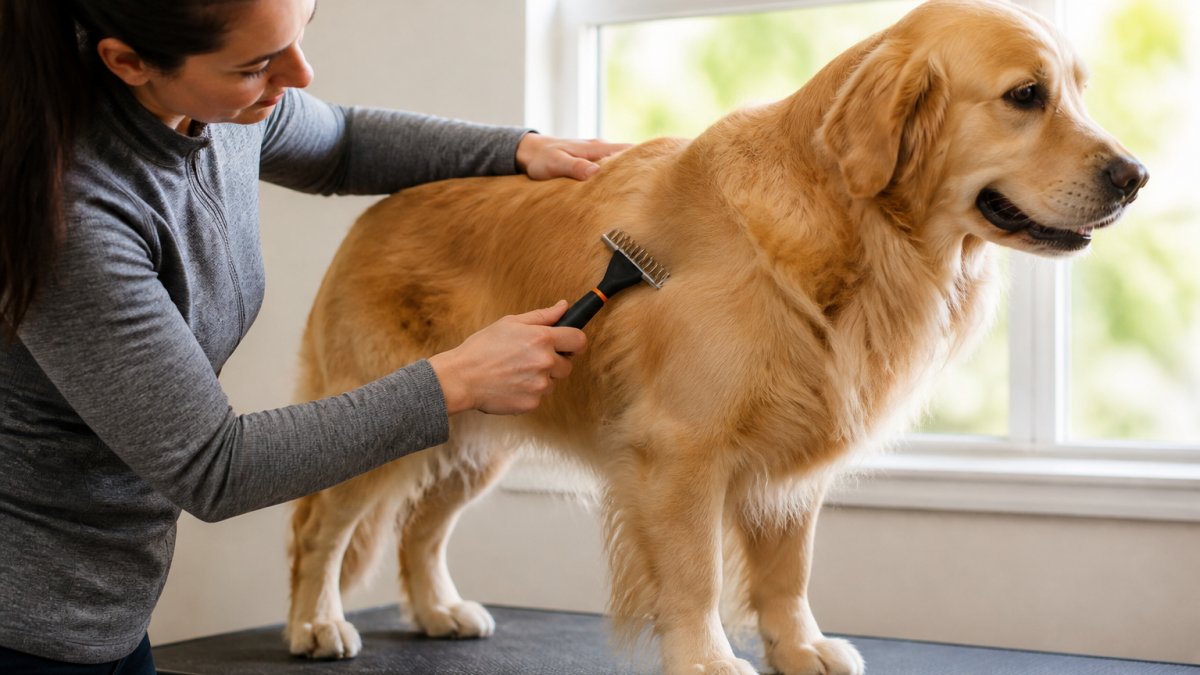
What You'll Need Before You Start
Gather these before you begin:
- An undercoat rake or deshedding tool
- A metal comb for checking progress
- A slicker brush for finishing
- Towels to contain loose hair
- Treats to reward your dog
- A grooming table or elevated surface (optional)
The Deshedding Process
Step 1: Bathe and dry your dog thoroughly. Deshedding works best on a clean, completely dry coat, damp hair clogs tools.
Step 4: Work in sections. Deshed one area at a time: neck, shoulders, back, sides, rear, legs. Spend 2-5 minutes per section.
Step 5: Check your progress with a metal comb. Run the comb through deshedded areas.
Step 6: Finish with a slicker brush. After raking, use a slicker brush to remove any remaining loose hair and smooth the coat.
Step 7: Reward your dog. Give treats and praise so your dog cooperates next time.
Most at-home sessions take 30-60 minutes depending on size and coat density. Start with 15-20 minutes if your dog is new to deshedding.
Stop if your dog shows signs of stress or discomfort. Excessive scratching, skin redness, or yelping means you're pressing too hard or the tool is irritating the skin. Switch to a gentler approach or consult a professional groomer.
Best Brush for Shedding Dogs: Choosing the Right Tool
The right deshedding tool makes the process faster and more effective.
Undercoat rakes are the gold standard for deshedding. Their short, close teeth grab loose undercoat without damaging topcoat. Look for sturdy metal construction and comfortable handles.
Deshedding mats (also called slicker mats) work for lighter shedding, gentler than rakes but less effective in heavy seasons.
Furminator-style tools are popular but can be harsh if used incorrectly, irritating sensitive skin.
Metal combs aren't deshedding tools, they check progress and remove tangles after raking.
The best tool depends on coat type. Double-coated breeds need an undercoat rake; single-coated or sensitive-skinned dogs do better with slicker brushes or deshedding mats.
Can You Deshed a Dog Too Much? Safety and Warning Signs
Yes, overdoing it damages the coat and irritates skin.
Warning signs you're deshedding too aggressively:
- Skin redness or irritation after grooming
- Your dog yelps or flinches during deshedding
- Hair is coming out even when it's not shedding season
- Bald patches or thin spots in the coat
- Your dog avoids grooming sessions
If you see these signs, reduce frequency and pressure, a gentle touch beats aggressive raking.
Safe deshedding limits depend on the season. During peak shedding, 2-4 times per week is safe; outside shedding season, once weekly is plenty. Never deshed the same area repeatedly in one session, once loose hair stops coming out easily, move on. The goal is removing dead hair, not forcing hair out that isn't ready.
The Real Impact: Reducing Loose Hair and Supporting Skin Health
Deshedding delivers real benefits, but it's worth separating what it reliably does from what it's sometimes claimed to do.
What Deshedding Reliably Does
Removes loose undercoat before it lands on your home. Dead hair that has separated from the skin is captured at the source with a rake or blade.
Improves air movement to the skin. A coat packed with dead undercoat traps warmth and moisture. Removing it lets air circulate, helping keep skin drier and less prone to irritation.
Supports a healthier-looking topcoat. With dead undercoat cleared, guard hairs lie smoother and reflect light better.
Makes bathing and drying more effective. Shampoo and water penetrate more evenly when loose undercoat is removed first, and drying times drop, reducing the risk of skin problems from a damp coat.
What Deshedding Does Not Do
It does not stop normal shedding. Every dog sheds. Deshedding manages the volume of loose hair in your home; it doesn't change biology. Expect reduced cleanup, not a shed-free dog.
It does not cure allergies or skin disease. Deshedding may reduce irritant buildup, but it won't resolve allergies, atopic dermatitis, or skin infections, those require veterinary diagnosis and treatment.
It does not replace routine brushing, bathing, or veterinary care. Deshedding is one part of a complete grooming routine, not a substitute.
It does not make a single-coated dog shed less. Dogs without an undercoat have nothing for a deshedding tool to remove; using one can thin the topcoat and irritate skin without reducing shedding.
A Realistic Expectation-Setting Guide
- First session: Expect a large volume of loose hair, especially during a seasonal blowout, normal, not a sign of over-deshedding.
- First week of a new routine: Home fur levels should drop noticeably. If not, check that you're using the right tool and reaching the undercoat.
- Ongoing: Shedding continues at its natural rate. Deshedding keeps pace with it rather than stopping it.
- If results plateau: The coat may be matted, the tool may be wrong, or the dog may have a skin issue needing veterinary attention.
If your dog's coat looks thinner after deshedding, or if you see bald patches, redness, or persistent scratching, stop and consult a veterinarian or professional groomer. These are not normal results of correct deshedding technique.
When Not to Deshed: Coat Types and Conditions to Avoid
Not every dog should be deshedded with an undercoat rake. Some coat types and health conditions require caution.
Dogs with single coats (like Poodles, Dachshunds, and Boxers) don't have undercoat to remove.
Dogs with very short coats (like Greyhounds or Pit Bulls) have minimal undercoat. Regular brushing is enough.
Puppies under 6-12 months don't have a fully developed adult coat. Wait until it matures before deshedding.
Dogs with skin conditions like dermatitis, open wounds, or severe allergies shouldn't be deshedded until the condition improves.
Senior dogs with thin or fragile coats need gentler grooming.
Dogs with matted or severely tangled coats need professional help, deshedding a matted coat causes pain and permanent damage.
Never force deshedding on a dog that's uncomfortable or stressed. Some dogs have sensitive skin that reacts poorly to undercoat rakes. Watch for signs of irritation and switch tools or stop if needed.
Conclusion
To deshed your dog regularly is one of the simplest ways to manage shedding and support coat and skin health. It takes 30-60 minutes, requires basic tools, and pays off in cleaner floors and a healthier coat.
Start with the right undercoat rake, follow a seasonal schedule matching your dog's shedding patterns, and use gentle technique. Most dogs adapt quickly, especially when rewarded with treats and praise.
At Bentley's Bark, we believe quality grooming tools and a consistent routine keep your dog comfortable and your home clean. Explore our curated selection of deshedding brushes and grooming supplies, each hand-picked for durability, comfort, and effectiveness. With complimentary shipping on every order, building your grooming kit has never been easier.
Frequently Asked Questions
How often should dogs be deshedded?
Frequency depends on your dog's coat type and shedding season. Double-coated breeds benefit from weekly or bi-weekly deshedding during spring and fall when they shed their undercoat heavily. Outside shedding season, monthly deshedding is usually sufficient for most dogs. Single-coated breeds may only need deshedding every 4-6 weeks year-round. Your groomer or veterinarian can recommend a schedule tailored to your dog's specific coat.
Does deshedding help reduce dog hair around the house?
Yes, regular deshedding significantly reduces loose fur in your home. By removing dead undercoat before it sheds naturally, you capture loose hair during grooming rather than finding it on furniture, floors, and clothing. Most pet parents notice a noticeable difference in household hair cleanup within a few weeks of starting a consistent deshedding routine. This is one of the most practical benefits for keeping your home cleaner.
Can you deshed a dog too often?
Over-deshedding can irritate the skin and damage healthy coat follicles if done too aggressively or too frequently. Limit deshedding to once weekly during heavy shedding seasons and monthly during other times. Watch for signs of discomfort such as redness, scratching, or sensitivity when touched. If your dog shows these signs, reduce frequency and consult your veterinarian. Puppies and dogs with sensitive skin should be deshedded less frequently and with gentler techniques.
What's the difference between deshedding and regular brushing?
Regular brushing removes surface tangles and loose topcoat hair, while deshedding specifically targets the dead undercoat beneath the topcoat. Deshedding tools like undercoat rakes and slicker brushes reach deeper into the coat to extract loose undercoat that regular brushes cannot access. This targeted approach removes significantly more loose fur and is especially important for double-coated breeds during shedding season. Both are valuable, but they serve different purposes in a complete grooming routine.