

Tips for Reducing Carbon Footprint When Ordering Pet Supplies
Last Updated: October 22, 2026
Quick Summary
To reduce your carbon footprint when ordering pet supplies, use what you already own first, then consolidate orders into fewer shipments and choose standard delivery over expedited. Buying durable, repairable items and bulk staples you will definitely finish cuts packaging and delivery emissions.
- Run an audit of toys, harnesses, treats and bedding before adding anything to a cart.
- Score products on sourcing, manufacturing, use, durability and end of life before buying.
- Consolidate orders and watch for split shipments that double packaging and delivery emissions.
- Buy in bulk only what you are confident your pet will finish before it expires.
- Use the specificity test: a claim that could apply to any product means nothing.
Table of Contents
- Start With What You Already Own
- Choose Sustainable Pet Supplies That Last
- Cut Pet Supply Packaging Waste Before It Arrives
- Is Buying Pet Supplies in Bulk Worth It?
- Reducing Delivery Emissions With Smarter Ordering
- A Practical Checklist for Evaluating Eco Claims
- How to Reduce Your Carbon Footprint Without Blowing Your Budget
- Frequently Asked Questions
Start With What You Already Own
The lowest-carbon pet supply is the one you don't order. Before you add anything to a cart, take stock of what's already in the closet, the toy bin and the cupboard under the sink.
Most pet parents are surprised by how much they've accumulated. Half-chewed toys, a harness that almost fits, three bags of treats your dog lost interest in.
Here's a simple audit to run this week:
- Gather every toy and check for loose stitching or missing squeakers
- Wash soft toys and bedding instead of replacing them
- Measure your pet again before buying a new harness or coat
- Check expiry dates on treats and supplements
A common mistake is buying a "greener" version of something you already own and barely use. That's not a swap.
Choose Sustainable Pet Supplies That Last
Durability is the most underrated sustainability feature in pet supplies. A toy that survives two years beats three "eco" toys that fall apart in months, every time. But durability is only one stage of a product's life, and the strongest choice depends on how sourcing, manufacturing, use, and disposal stack up together.
Think in life-cycle stages, not single materials
A common mistake is treating a material as sustainable in isolation. Hemp fabric can be low-impact to grow but energy-intensive to process. Recycled plastic keeps material in circulation but may shed microplastics during use. The practical approach is to compare products across five stages:
- Sourcing: Is the material renewable, recycled, or responsibly harvested? Does the brand disclose origin?
- Manufacturing: Does the listing mention low-impact processing, local production, or reduced water and energy use?
- Use phase: How often will it be washed, refilled, or recharged? High-maintenance items carry hidden energy and water costs.
- Durability and repair: Are replacement parts, covers, or repair kits available?
A product that scores well on four stages but poorly on one is usually still a better bet than a product with a single "green" claim and no disclosure elsewhere.
Match the material to the product category
Species and product type change which stage matters most:
- Dog and cat toys: Reinforced stitching, solid hardware, and washable covers extend lifespan more than the base material. Look for toys with replaceable squeakers or refillable treat pockets.
- Harnesses, collars, and coats: Adjustability and repairability beat material claims. A harness with replacement buckles or straps outlasts a cheaper one that has to be replaced whole.
- Litter and bedding: For cats and small animals, substrate choice drives impact. Paper-based or wood-pellet litters from responsible sourcing often have lower extraction impact than clay-based clumping litter, and they break down more readily. Bedding for hamsters, guinea pigs, and rabbits should be dust-extracted and compostable where municipal programs allow.
- Aquarium supplies: Filters, heaters, and pumps are the durability priority. Buying a repairable filter with available replacement media keeps the unit out of landfill far longer than replacing a sealed unit.
- Food and treats: Protein source carries a large share of a pet diet's environmental impact. The Natural History Museum's guidance on greener pet ownership notes that changing what pets eat can meaningfully reduce their carbon pawprint. Look for ethically sourced ingredients and transparent sourcing statements from brands that publish where their protein comes from.
Use a simple comparison method
When two products look similar, score each on the five stages above using a simple high, medium, or low rating. You do not need precision. The goal is to spot the product that discloses more and lasts longer, because disclosure and durability are the two hardest claims to fake.
What most guides miss is that "natural" and "sustainable" aren't regulated the same way. A product can call itself natural with very little proof. Durability, repairability, and material disclosure are harder claims to fake, which is why they should carry more weight in your decision than a single eco label.
Cut Pet Supply Packaging Waste Before It Arrives
Pet supply packaging waste is largely decided before the box reaches your door. The retailer chooses the box, the filler, and the inner wraps, so the most effective lever you have is where you shop and how you order. Most guides stop at "choose recyclable packaging." The bigger wins come from how the order is assembled and shipped.
Control what you can at checkout
- Consolidate orders so one box ships instead of four. Fewer shipments mean less cardboard, less filler, and fewer delivery trips.
- Watch for split shipments. Large orders sometimes ship from multiple warehouses, doubling packaging and delivery emissions. Check the order confirmation for split-shipment notices and, where possible, choose retailers that fulfill from a single location.
- Choose standard delivery over expedited. Standard shipping often lets carriers group routes and fill vehicles, while expedited options may run partially empty runs to hit tight windows.
- Look for local pickup or locker options. Picking up from a nearby locker or storefront can cut the last-mile delivery leg entirely.
- Skip individual wrapping where the option exists, and buy the largest size that makes sense for shelf-stable items to reduce packaging per unit.
At Bentley's Bark, every order ships with complimentary shipping, which makes it easier to batch a month's worth of essentials into a single delivery rather than placing four small orders.
Deal with what arrives
Flatten cardboard, rinse out pouches, and check your municipality's rules on soft plastics, since curbside programs vary widely across the country. Some programs accept only rigid containers, while others take flexible film at drop-off points. Reusing a sturdy box for storage or donation drop-offs keeps it in circulation a little longer.
Is Buying Pet Supplies in Bulk Worth It?
Sometimes. Bulk buying is a genuine win for shelf-stable staples and a genuine loss for anything your pet might outgrow or lose interest in.
Bulk works well for:
The Hamster Care Planner - Printable PDF (Instant Download) →
- Dry food your pet eats daily, within its freshness window
- Litter, if you have dry storage space
- Poop bags and other consumables you'll definitely use
- Treats with a long shelf life
Bulk backfires for:
- Puppies and kittens still growing out of harnesses and crates
- Toys your pet may ignore
- Anything with a short expiry date
- Products you're trying for the first time
The trade-off is real. Bulk reduces packaging per unit and cuts delivery frequency, but wasted product wipes out those gains fast. Buy in bulk only what you're confident you'll use completely.
Reducing Delivery Emissions With Smarter Ordering
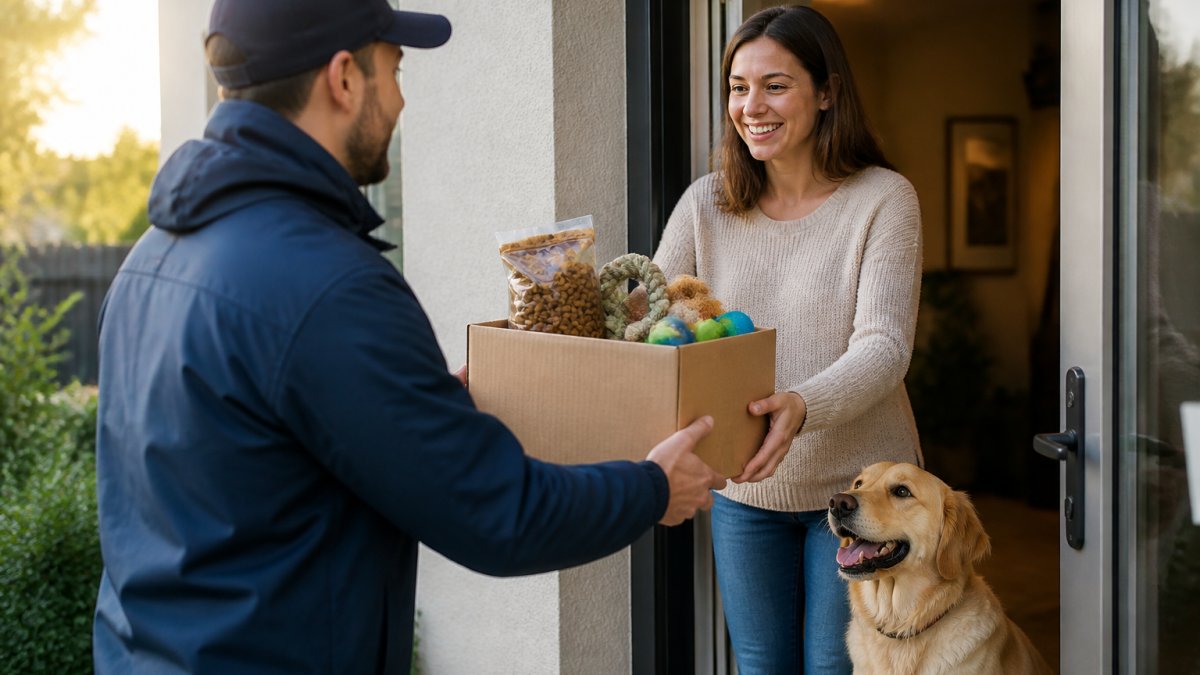
Reducing delivery emissions comes down to fewer, fuller trips. Every separate order is another vehicle journey, another box and another round of packaging, so order consolidation is the highest-impact habit on this list.
Try these:
- Set a weekly or biweekly order day instead of ordering on impulse
- Add low-stock items to a saved cart until your order day
- Choose standard delivery over expedited, which often allows carriers to group routes
- Check whether a local pickup or locker option exists near you
Consolidation also helps your budget. Fewer orders mean fewer chances to add something you didn't need. If you're ordering from Bentley's Bark, build one list across the month and check out once.
A Practical Checklist for Evaluating Eco Claims
Most eco claims are unverified marketing. A structured checklist is the fastest way to separate substance from noise.
Use this before you buy:
- Material specifics: Does the listing name the material, or just say "eco-friendly"?
- Sourcing statement: Does the brand say where ingredients or materials come from?
- Durability evidence: Are there care instructions, warranties or repair options?
- Packaging detail: Does it state recyclable, minimal or plastic-free packaging?
- End-of-life guidance: Does it explain how to dispose of or recycle the product?
The specificity test catches most greenwashing. "Made with recycled materials" is checkable. "Planet-friendly" is not.
How to Reduce Your Carbon Footprint Without Blowing Your Budget
Sustainability advice often assumes a bigger budget than most people have. The good news is that the highest-impact changes are usually the cheapest ones.
Ranked by impact per dollar:
| Change | Upfront Cost | Ongoing Saving | Effort |
|---|---|---|---|
| Use what you own first | None | High | Low |
| Consolidate orders | None | Moderate | Low |
| Buy durable, repairable items | Higher per item | High over time | Low |
| Switch to bulk staples | Moderate | Moderate | Moderate |
| Choose minimal packaging | None | None | Low |
| Repair instead of replace | Low | High | Moderate |
Start at the top. Using what you own and consolidating orders cost nothing and cut waste immediately. Durability costs more upfront but pays back over the product's life, which is why it beats buying cheap replacements repeatedly.
Digital tools help too. A care planner like The Hamster Care Planner - Printable PDF at $11.99 includes a supplies checklist and monthly budget tracker, so you can see what you actually use and stop over-ordering. The same structure appears in the Bird Care Planner and Hedgehog Care Planner, each priced at $11.99 as an instant download with no shipping at all.
Frequently Asked Questions
Does ordering pet supplies online create a large carbon footprint?
It can, but the delivery leg is usually a small part of the total. Most of the environmental impact comes from manufacturing, packaging, and how often you replace items. A single van delivering to 40 homes on one route produces far fewer emissions per parcel than 40 separate car trips to a store. The bigger levers are choosing durable products, consolidating orders into fewer deliveries, and avoiding unnecessary purchases. Ordering online is not automatically worse, but how you order matters.
How can I reduce packaging waste when buying pet supplies?
Ask the retailer to ship in minimal packaging or consolidate items into one box, and choose suppliers that use recyclable or paper-based materials instead of plastic fill. Avoid ordering single small items that arrive in oversized boxes. Buying pet supplies in bulk reduces the packaging-to-product ratio, and choosing concentrated or refill formats cuts plastic further. When packages do arrive, recycle cardboard and separate soft plastics where your municipal program accepts them.
Is it better to buy pet supplies in bulk?
Often yes, for non-perishables like litter, food, and treats. Bulk buying means fewer deliveries, less packaging per unit, and fewer trips overall, which lowers delivery emissions and pet supply packaging waste. The catch is storage space and spoilage. Only bulk-buy what your pet will finish before it expires, and check that the larger format actually costs less per kilogram or per litre. For toys and accessories, durability matters more than volume.
What should I look for in eco-friendly pet toys and accessories?
Prioritize durability first, since a toy that lasts two years beats three that fall apart in months. Look for natural fibers like organic cotton or bamboo, recycled materials, and non-toxic finishes, especially for items your pet chews. Check whether the product can be repaired or recycled at end of life. Be skeptical of vague 'green' labels without specifics. A short, verifiable materials list is a stronger signal than a leaf icon on the box.
Cutting your pet's carbon footprint doesn't require a complete overhaul. It requires buying less, buying better and ordering smarter. Bentley's Bark curates durable, honestly made supplies, from toys and apparel to smart feeders, and ships every order free so you can consolidate into fewer deliveries. Start with one change this month: audit what you own, then build a single considered order.