

How to Spot Quality Pet Products: A Buyer's Guide
Table of Contents
- How to Spot Quality Pet Products: What Matters Most
- Check Ingredient Sourcing and Label Transparency
- How to Read Pet Food Labels in Canada
- Verify Third-Party Testing and Safety Standards
- Safe Pet Toys for Dogs and Cats: Identifying Quality Materials
- Check the Pet Product Recall Database Canada
- How to Evaluate Pet Supplement Quality
- Identify Trustworthy Suppliers and Detect Counterfeits
Last Updated: August 3, 2026
How to Spot Quality Pet Products: What Matters Most
Learning to spot quality pet products is essential for any pet parent who wants to ensure their dogs and cats receive the best possible care. At Bentley's Bark, we understand that quality matters for your pet's health, happiness, and your peace of mind. Poor-quality pet products can lead to choking hazards, toxic exposure, nutritional deficiencies, and wasted money. A study from the Canadian Veterinary Medical Association on pet product safety highlights that many pet parents don't know how to evaluate the products they're buying. The good news is that spotting quality requires knowing what to look for and where to look.
Check Ingredient Sourcing and Label Transparency
Ingredient sourcing is where quality begins. When manufacturers are transparent about where their ingredients come from, it signals confidence in their supply chain. Look for specific sourcing information on packaging or the brand's website; vague language like "premium ingredients" without detail is a red flag.
High-quality pet food and treats should list the specific protein source first (chicken, beef, fish) rather than generic terms like "meat meal" or "animal by-products." Named ingredients tell you exactly what your pet is eating. Reputable brands publish information about their manufacturing facilities, quality control processes, and ingredient suppliers. Some even provide farm-to-bowl traceability. If a brand refuses to answer questions about sourcing or manufacturing, look elsewhere.
Pet supplements present a particular challenge because they're less regulated than food. Look for brands that disclose exactly where botanical ingredients are sourced and whether they've been tested for contaminants.
Reading and interpreting labels correctly
Pet food labels in Canada are regulated by the Canadian Food Inspection Agency (CFIA), which sets standards for what must appear on packaging.
The ingredient list appears in descending order by weight. For dog and cat foods, look for named meat proteins (chicken, beef, fish) in the top three ingredients. If corn, wheat, or soy appear first, the product is primarily grain-based.
Guaranteed analysis statements show minimum percentages of crude protein and fat, and maximum percentages of crude fiber and moisture. The ingredient list tells you the source; the guaranteed analysis tells you the amount. Avoid products with artificial colors, artificial flavors, or chemical preservatives like BHA, BHT, or ethoxyquin. Natural preservatives like mixed tocopherols (vitamin E) are preferable.
How to Read Pet Food Labels in Canada
Canadian pet food labels follow CFIA regulations that require specific information be displayed prominently. The product name, ingredient list, guaranteed analysis, and feeding directions must all be present and legible.
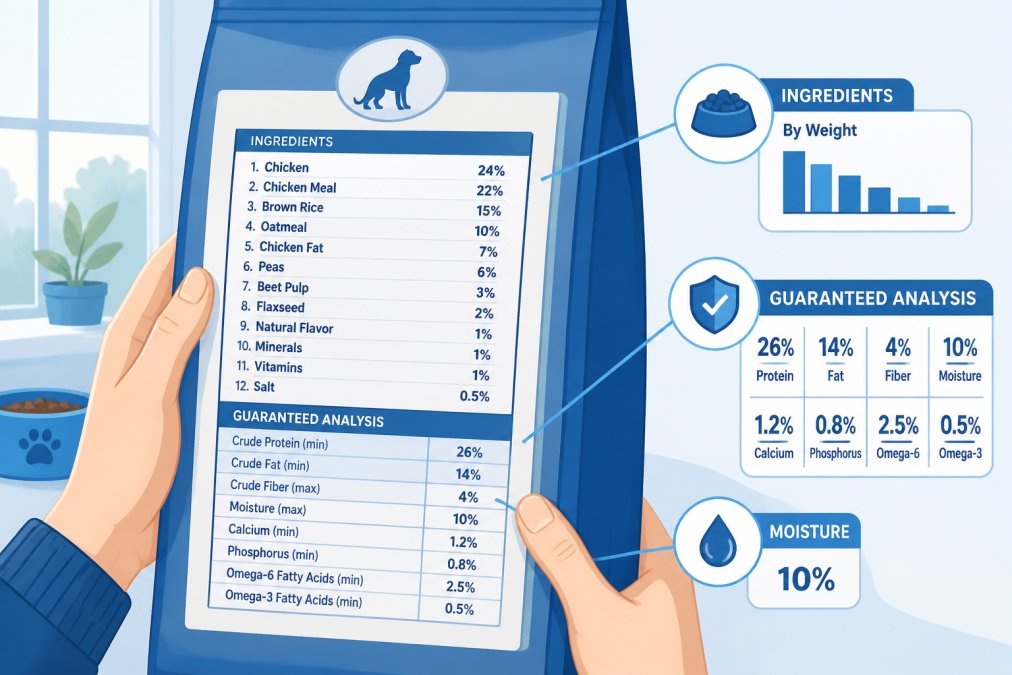
Start by checking the product name. "Chicken Dog Food" means chicken is the primary ingredient. "Dog Food with Chicken" means chicken is present but not necessarily the main ingredient. "Chicken Flavor Dog Food" means the product is flavored to taste like chicken but may contain little to no actual chicken.
The ingredient statement lists every component in descending order by weight. Pet food manufacturers sometimes use ingredient splitting, listing multiple corn products separately so none appears too high on the list. When combined, corn might actually be the primary ingredient. Scan the full list for patterns like this.
Look for the AAFCO (Association of American Feed Control Officials) statement or Canadian equivalent certification. This confirms the food meets minimum nutritional standards, though meeting minimums doesn't mean the product is premium.
Feeding guidelines should specify portion sizes based on your pet's weight and life stage. Vague instructions like "feed as needed" suggest the manufacturer hasn't done the testing necessary to provide specific guidance.
Verify Third-Party Testing and Safety Standards
Third-party testing is the gold standard for product quality verification. When an independent laboratory tests a product, not the manufacturer, the results carry credibility that marketing claims cannot. For pet supplements and treats, third-party testing verifies that the product contains what the label claims.
Material safety testing is critical for toys and chew products. A toy might look sturdy, but if the material breaks down easily or contains toxic dyes, it's dangerous. Look for products tested for durability, material safety, and absence of harmful chemicals.
Certifications from recognized bodies carry weight. In Canada, products may carry CSA (Canadian Standards Association) marks or other regulatory certifications. Be cautious of generic-sounding certifications that don't correspond to real testing organizations.
Physical material testing for toys and gear
Quality toys withstand aggressive chewing, tugging, and play without breaking into small pieces. Manufacturers of quality products test their toys with real dogs of different sizes and bite forces. If a toy is marketed as "indestructible" or "heavy-duty," the manufacturer should have documentation of durability testing.
Examine the seams and construction. Toys with reinforced stitching, double-layered materials, and secure attachments last longer and are safer. Material composition matters: natural rubber and dense nylon are more durable than soft plastic or thin fabric.
Test the toy yourself before giving it to your pet. If you can damage it easily with moderate force, your pet will destroy it quickly.
Safe Pet Toys for Dogs and Cats: Identifying Quality Materials
For dogs, rubber toys are often excellent because they're durable and can be cleaned easily. Look for toys made from natural rubber or high-grade synthetic rubber that doesn't contain phthalates or BPA. Toys marked as "food-grade" meet standards for products that contact food.
Rope toys are popular but require caution. Quality rope toys are tightly woven with secure knots. Poorly made rope toys shed fibers that can cause intestinal blockages if swallowed. Inspect rope toys regularly and discard them if fibers are coming loose.
Fabric toys should be well-constructed with reinforced seams and no loose buttons, beads, or decorations that could be swallowed. For cats, toys with feather or string attachments should be supervised play only.
Avoid toys with small parts, thin plastic, or materials that splinter easily. Verify that eco-friendly or sustainable toys are also durable, as some biodegradable materials break down too quickly to be safe for pets.
Bentley's Bark carefully curates toy selections to ensure they meet durability and safety standards.
Check the Pet Product Recall Database Canada
The Canadian Food Inspection Agency (CFIA) product recall database is your primary resource for identifying products that have been recalled due to safety concerns. Check this database before purchasing any pet food, treat, or supplement.
Recalls happen for various reasons: contamination, mislabeling, choking hazards, or discovery of harmful ingredients. A product recall isn't necessarily a sign of poor manufacturing, but brands with multiple recalls in short timeframes show a pattern of quality control problems.
When checking the database, search by product name, brand, or UPC code. Keep records of products you purchase, including batch numbers and purchase dates. This makes it easier to check if a product you own is later recalled.
Responsible brands communicate recalls transparently. If a brand tries to hide a recall or downplay a safety issue, that's a major red flag about their integrity.
How to Evaluate Pet Supplement Quality
Pet supplements are less regulated than pet food in Canada, which means quality control varies widely. The first step is confirming that the supplement contains what it claims. Third-party testing is the best way to verify this. Look for products with third-party testing seals from organizations like USP (U.S. Pharmacopeia) or NSF Certified for Sport.
Check the source of active ingredients. Glucosamine sourced from shellfish is different from glucosamine synthesized in a lab; some pets with shellfish allergies react to the former. Probiotics should list the specific bacterial strains and their CFU (colony-forming units) count.
Avoid supplements with excessive fillers, artificial colors, or flavors. Dosage recommendations should be specific to your pet's weight and age. Vague instructions indicate the manufacturer hasn't done proper testing.
Consult your veterinarian before starting any supplement. Your vet can recommend products they trust and identify potential interactions with medications your pet takes.
Identify Trustworthy Suppliers and Detect Counterfeits
Where you buy pet products matters as much as what you buy. Authorized retailers and brand websites are your safest options. Third-party marketplaces and discount retailers sometimes carry counterfeit or expired products.
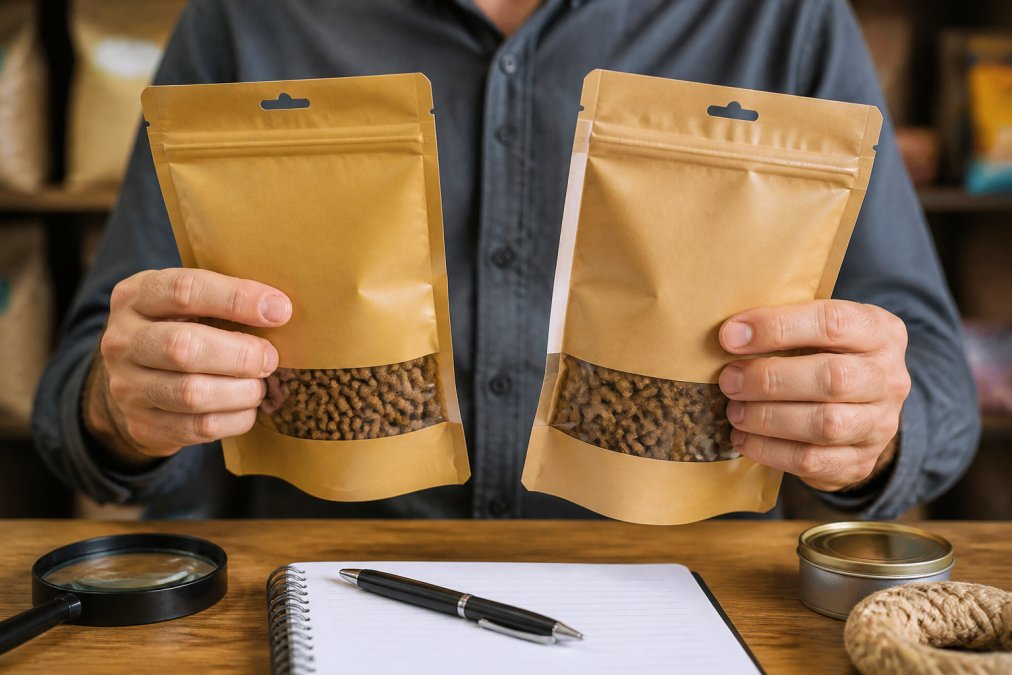
Counterfeit pet products are a real problem. Fake supplements, treats, and even pet food can be dangerous. Examine packaging closely. Genuine products have consistent printing quality, correct spelling, and secure seals. Counterfeit products often have blurry printing, spelling errors, or loose packaging.
Verify serial numbers and batch codes. Many quality brands include codes on packaging that can be verified on their websites. Price discrepancies are a warning sign. If a product is being sold at a price significantly below the manufacturer's recommended retail price, ask why.
Buy from retailers with strong reputations and customer service. Bentley's Bark sources directly from manufacturers and authorized distributors, ensuring every product is genuine and meets our quality standards.
Supply chain ethics and manufacturing transparency
Consider the ethics of how products are made. Transparent manufacturing practices indicate a company that cares about more than just profit. Quality manufacturers disclose their manufacturing locations, quality control processes, and worker conditions.
Look for brands that invest in product testing and quality improvement. Companies that continuously test their products and listen to customer feedback demonstrate commitment to quality. Supply chain ethics often correlate with product quality.
Bentley's Bark prioritizes supply chain transparency and ethical sourcing. We work with manufacturers who share our commitment to quality and responsible practices.
| Quality Signal | What to Look For | Why It Matters |
|---|---|---|
| Ingredient sourcing | Named, specific sources listed | Prevents unknown fillers and contaminants |
| Third-party testing | Independent lab certifications | Verifies claims and identifies hazards |
| Manufacturing transparency | Facility info and quality control details | Shows confidence in production standards |
| Label clarity | Specific ingredients and dosage guidance | Ensures you know exactly what you're buying |
| Recall history | Minimal recalls, transparent communication | Indicates consistent quality control |
| Material durability | Products withstand real-world use | Prevents choking hazards and premature failure |
| Certification marks | CSA, AAFCO, or equivalent standards | Confirms testing against recognized standards |
| Supply chain ethics | Transparent sourcing and labor practices | Often correlates with overall product quality |
Spotting quality pet products takes practice, but the effort pays off in your pet's health, safety, and happiness. Start by checking ingredient lists, verifying third-party testing, and researching supplier reputations. Each product category has its own quality markers; learn them, and you'll make better choices every time.
That's exactly why Bentley's Bark exists. We've done the research for you, curating a selection of products that meet rigorous quality standards for ingredient sourcing, safety testing, and manufacturing transparency. Every product in our collection is hand-picked to solve real problems while maintaining the material quality and honest design your pet deserves. Start exploring our curated selection today and give your pet the quality they truly need.
Frequently Asked Questions
How do I know if a pet product meets Canadian safety standards?
Check for compliance with Health Canada regulations and Canadian Consumer Product Safety Act standards. Look for third-party testing certifications from accredited labs. Pet toys and consumables should display certification marks or reference compliance documentation. Verify the manufacturer's address is in Canada or that they comply with Canadian import requirements. Check the Canadian Consumer Product Safety Database for any recalls on the specific product before purchasing.
What red flags should I look for when reading pet food labels?
Avoid products listing vague ingredients like 'meat by-products' or 'animal derivatives' without specification. Watch for excessive artificial colours, flavours, or preservatives like BHA and BHT. Check that a named protein source (chicken, beef, fish) appears in the first ingredients. Be cautious of products with high filler content (corn, wheat) or those lacking nutritional analysis details. Missing ingredient sourcing information or unclear manufacturing location are also warning signs to avoid.
How can I spot a counterfeit pet product?
Compare packaging quality, font consistency, and colour accuracy against official product images from the manufacturer's website. Check for misspellings or poor print quality. Verify the serial number or batch code with the manufacturer if available. Counterfeit products often have inconsistent pricing across retailers. Purchase from verified suppliers and authorized distributors only. If a deal seems unusually cheap, request proof of authenticity or buy from a retailer with a return guarantee to protect your pet.
What certifications should I look for on quality pet products?
Look for third-party testing certifications from accredited Canadian labs, particularly for toys and supplements. AAFCO (Association of American Feed Control Officials) standards are recognized in Canada for pet food. ISO certifications indicate manufacturing quality standards. Some premium brands pursue additional testing for toxic materials and durability. Ask manufacturers directly for test reports or certification documentation. Products sold through established retailers often come with implied quality assurance, but independent certifications provide stronger proof of safety and ingredient integrity.
This article was written using GrandRanker