

How to Keep Your Home Clean With Pets
Table of Contents
- Establish a Daily Pet Cleaning Routine
- Choose the Right Vacuum for Pet Hair
- Master Odor Removal From Upholstery
- Stop Dirt and Hair at the Door
- Manage Shedding and Dander Control
- Use Performance Fabrics and Smart Textiles
- Keep Your Home Clean With Pets: A Realistic Approach
- Conclusion
Last Updated: August 11, 2026
Establish a Daily Pet Cleaning Routine
A daily pet cleaning routine prevents pet hair, dander, and odors from becoming overwhelming. Start each morning by grooming your pet for 5-10 minutes. A quick brush removes loose fur before it lands on furniture and floors. Evening grooming catches the day's accumulated shedding. This simple habit cuts the amount of hair you'll find around your home significantly.
Morning and Evening Essentials
Your morning routine should take less than 15 minutes. Brush your pet's coat thoroughly, focusing on areas prone to matting. Use a lint roller on furniture your pet slept on overnight. Wipe your pet's paws with a damp cloth or pet-safe wipe to remove dirt and moisture before they track it through the house.
In the evening, repeat the grooming process, especially if your pet has spent time outdoors. Evening grooming also helps your pet wind down before bed. Keep grooming supplies in an accessible location near your pet's favorite resting areas. A basket with brushes, lint rollers, and pet wipes means you're more likely to use them consistently.
Grooming as Prevention
Grooming is preventive maintenance for your home. When you remove loose fur directly from your pet's coat, it never reaches your upholstery, carpets, or floors. Invest in a quality brush suited to your pet's coat type. Dogs with double coats need undercoat rakes. Cats benefit from slicker brushes or metal combs. Bentley's Bark offers a Pet Hair Vacuum and Grooming Kit with Dog Clipper that combines grooming and hair removal in one device, designed specifically to reduce shedding and maintain coat health.
Choose the Right Vacuum for Pet Hair
A pet-specific vacuum has stronger suction, specialized brush designs, and HEPA filtration to trap allergens. Standard household vacuums struggle with pet hair because it wraps around brush rolls and clogs filters.
What to Look for in a Pet Hair Vacuum
Look for a vacuum with motorized brush rolls that prevent hair from tangling. Strong suction power matters more for pet hair than regular dust, aim for at least 200 air watts. HEPA filtration is essential if anyone in your home has allergies or asthma, capturing 99.97% of particles including pet dander and dust mites.
Consider whether you need a handheld attachment for upholstery and stairs, where pet hair tends to accumulate. The Pet Hair Remover Vacuum combines suction with grooming functionality, making it efficient for both floor cleaning and direct pet hair removal.
Vacuuming Frequency and Technique
Vacuum high-traffic areas daily if you have shedding pets. Other areas can be vacuumed 2-3 times per week depending on your pet's shedding level. Use slow, deliberate passes when vacuuming, moving slowly gives the brush roll time to pull hair from deep within carpet fibers. Quick passes miss embedded hair.
Master Odor Removal From Upholstery
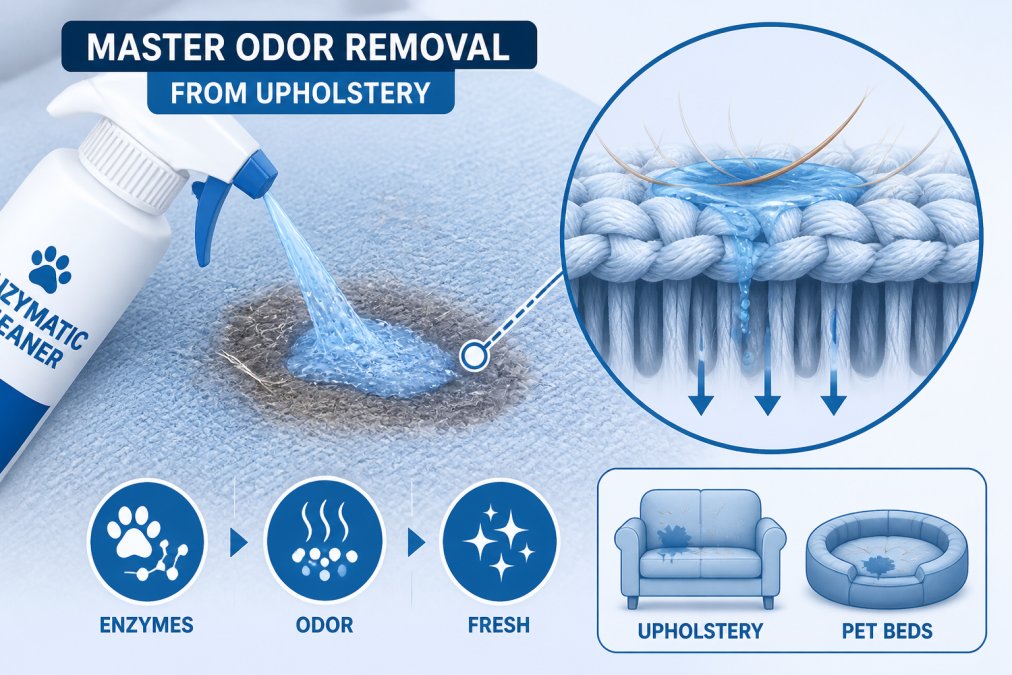
Pet odors embed themselves in upholstery because urine, sweat, and natural body oils soak into fabric fibers. True odor removal requires enzymatic action, not just masking scents.
Enzymatic Cleaners and Pet-Safe Solutions
Enzymatic cleaners break down the organic compounds that cause pet odors by digesting urine, feces, and other organic matter at a molecular level. When choosing a pet-safe cleaner, look for products specifically labeled as non-toxic and pet-friendly. Avoid cleaners containing ammonia, bleach, or phenol, which are harmful to pets.
For fresh accidents, blot up as much liquid as possible before applying cleaner. Let the enzymatic cleaner sit for the time recommended on the label, usually 10-15 minutes, to allow enzymes time to break down odor-causing compounds.
Spot Cleaning and Deep Cleaning Methods
Spot cleaning handles fresh accidents and small stains. Apply enzymatic cleaner directly to the affected area, let it sit, then blot thoroughly with clean cloths. The key is removing all traces of the enzyme-treated liquid, because leftover cleaner can attract pets back to the same spot.
Deep cleaning is necessary for stubborn odors that have penetrated deep into upholstery. Rent a carpet cleaning machine or hire a professional who specializes in pet odor removal. For ongoing odor management, sprinkle baking soda on upholstery, let it sit for 15 minutes, then vacuum thoroughly.
Stop Dirt and Hair at the Door
Your entryway is the first line of defense against dirt and pet hair entering your home. Every time your pet comes inside, they're carrying soil, moisture, and loose hair on their paws and coat.
Paw Maintenance Stations
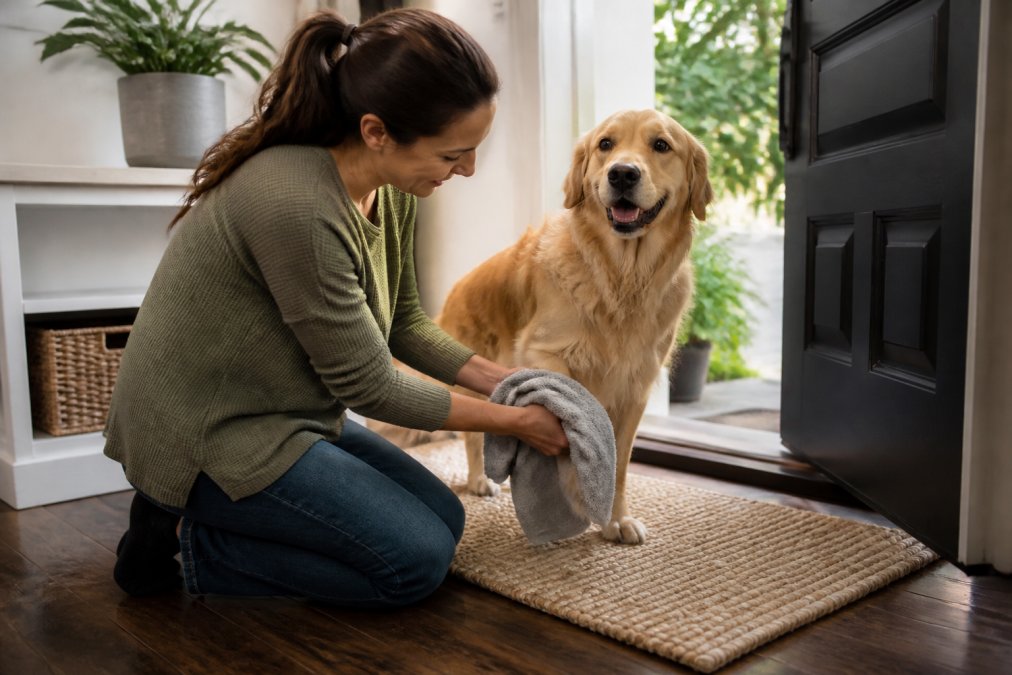
Create a dedicated paw maintenance station at every entry point your pet uses. Keep towels, pet wipes, and a basin of water within arm's reach. When your pet comes inside, wipe their paws before they step onto your main living areas. Pet-safe wipes dissolve dirt and moisture without harsh chemicals.
For muddy paws, rinse them outside with a hose before coming in. Dry paws thoroughly before allowing your pet into carpeted areas, because wet paws spread moisture and create ideal conditions for odors to develop.
Indoor-Outdoor Rugs and Entry Mats
Place an absorbent mat inside and outside your door. Outdoor mats capture mud and debris before your pet enters. Indoor mats absorb moisture from wet paws and trap remaining dirt. Choose mats made from materials that are easy to clean, microfiber and rubber-backed options are ideal.
Wash entry mats weekly. Dirt and moisture accumulate quickly, and unwashed mats become odor sources themselves. Consider using an indoor-outdoor rug in high-traffic pet areas. Bentley's Bark offers a Spill-Proof Pet Dining Mat that keeps mealtime contained while maintaining a clean, stylish appearance.
Manage Shedding and Dander Control
Shedding and dander are inevitable with pets, but they're manageable with the right approach. Dander, dead skin cells shed by your pet, is lighter than hair and stays airborne longer, making it a particular concern for people with allergies.
Seasonal Shedding Strategies
Most pets shed more heavily during spring and fall as they transition between seasonal coats. During these periods, increase grooming frequency to daily. Bathing your pet during heavy shedding seasons helps loosen dead hair. Many pet owners find that bathing followed by grooming removes substantially more loose hair than grooming alone.
Consider professional grooming during peak shedding seasons. Groomers have industrial-strength equipment to remove far more loose hair than home grooming tools.
Air Purification and Allergen Control
An air purifier with HEPA filtration removes pet dander and hair particles from the air. Place purifiers in bedrooms and main living areas. Wash pet bedding weekly in hot water to kill dust mites and remove accumulated dander. If your pet sleeps on your furniture, wash those cushion covers weekly as well.
Lint rollers and pet hair removal tools are essential for daily maintenance. The Pet Fur Eliminating Roller is a reusable option that eliminates the need for disposable sheets. Keep one on your couch, one in your bedroom, and one in your car.
Use Performance Fabrics and Smart Textiles
The furniture and textiles you choose directly impact how easy it is to keep your home clean with pets. Performance fabrics are engineered to resist staining and shed pet hair more easily than traditional materials.
Microfiber and Stain-Resistant Options
Microfiber is dense and tightly woven, making it resistant to pet stains and odors. Pet hair doesn't embed itself in microfiber the way it does in natural fabrics. Stain-resistant treatments create a protective barrier on fabric fibers, preventing liquids from soaking in and giving you time to blot up accidents before they set.
Leather is another durable option for pet owners, it's easy to wipe clean and doesn't absorb odors. Avoid light-colored fabrics if you have dark-colored pets, as they show pet hair and stains immediately. Darker or patterned fabrics camouflage pet hair and are more forgiving of inevitable accidents.
Pet Bedding and Washable Covers
Invest in pet bedding with removable, washable covers. Washable covers allow you to clean bedding weekly without replacing the entire bed. Waterproof mattress protectors under bedding prevent accidents from soaking through to the underlying structure, especially valuable for puppies, senior pets, or pets with incontinence issues.
Place washable rugs under furniture where your pet likes to rest. These rugs protect your floors and are easier to clean than permanent flooring.
Keep Your Home Clean With Pets: A Realistic Approach
Keeping your home clean with pets requires accepting that perfection isn't the goal. Pet hair will appear on your clothes. Accidents will happen. The objective is managing these inevitable situations quickly and preventing them from becoming overwhelming.
Create systems that work with your lifestyle, not against it. If you hate vacuuming, invest in a quality vacuum that makes the task faster. If you forget grooming, set phone reminders. The most successful pet owners treat home cleanliness as ongoing maintenance, not a crisis to manage. Small, consistent efforts compound into a clean, fresh-smelling home.
Bentley's Bark understands that pet parents need practical solutions that actually work. Our curated selection of cleaning and grooming products, from the Pet Hair Vacuum and Grooming Kit with Dog Clipper to the Pet Fur Eliminating Roller, are designed to make keeping your home clean easier. Every product is hand-picked for quality and effectiveness, so you can focus on enjoying your pets rather than fighting a losing battle against hair and odor.
Keeping your home clean with pets is manageable when you have the right systems and tools. Start with a daily grooming routine to prevent hair from accumulating. Invest in a vacuum designed for pet hair and use it frequently in high-traffic areas. Address odors with enzymatic cleaners that break down the compounds causing the smell. Stop dirt at the door with paw maintenance stations and quality entry mats. Manage shedding through seasonal grooming and air purification. Choose performance fabrics and washable covers that simplify cleanup. The goal isn't a spotless home, it's a clean, fresh-smelling space where you and your pets can live comfortably. With consistent daily habits and the right products, that's absolutely achievable. Explore Bentley's Bark's curated collection of pet cleaning and grooming solutions to find tools that fit your lifestyle and help you maintain a home you're proud of.
Frequently Asked Questions
How often should you clean your house if you have a dog?
For homes with dogs, vacuum high-traffic areas and pet bedding 3-4 times per week, with a full deep clean weekly. Spot-clean accidents and spills immediately to prevent odors from setting. Daily sweeping or lint rolling of furniture helps manage shedding between vacuuming sessions. The frequency depends on your dog's shedding level and coat type, heavy shedders may need daily maintenance, while lighter shedders require less frequent attention.
What are the best pet-safe cleaning products for floors and carpets?
Look for enzymatic cleaners specifically formulated for pet messes, as they break down urine and odor compounds naturally. Avoid ammonia-based products, which can mimic urine scent and encourage re-marking. Baking soda and white vinegar work well for deodorizing carpets and upholstery. For hardwood floors, use pH-neutral cleaners to avoid damage. Always check labels to ensure products are non-toxic and safe for pets to walk on after application.
How can I remove pet odors from upholstery?
Start with enzymatic cleaners designed for pet odors, these break down the compounds causing the smell rather than masking it. Sprinkle baking soda on affected areas, let sit for 15-30 minutes, then vacuum thoroughly. For deeper odors, mix equal parts white vinegar and water, spray lightly, and allow to air dry. Consider washable furniture covers or microfiber upholstery that resists odor absorption. Regular grooming and daily maintenance prevent odors from building up in the first place.
What's the best way to manage pet shedding year-round?
Establish a grooming routine using tools like the Pet Hair Vacuum and Grooming Kit, which reduces shedding at the source by removing loose fur before it falls. Brush your pet 2-3 times weekly, increasing frequency during seasonal shedding peaks. Use lint rollers and microfiber tools like the Pet Fur Eliminating Roller on furniture and bedding daily. Maintain air filtration and vacuum high-traffic areas frequently. During heavy shedding seasons, consider more frequent professional grooming to manage dander and loose coat effectively.
This article was written using GrandRanker